Reaching the age of 18 marks a significant crossroads in every person's life, and for autistic people, this transition entails unique adjustments and challenges. While the support system for autistic children and adolescents tends to be focused and structured, the transition to the adult world often changes the nature of available support and social expectations. The understanding that Autism is not a childhood condition that passes, but an integral part of a neurological profile that remains throughout life, forms the basis for this journey.
With the entry into adulthood, the focus shifts from direct support based on the status of 'child with special needs' to a model where greater responsibility is placed on the individual to identify their needs, express them, and navigate various systems independently. This change requires developing skills of self-awareness, communication, and self-advocacy, as many describe their experience. This article examines the key aspects of this transition, referring to the personal journey of self-discovery, employment challenges, building relationships, and maintaining mental well-being, all through the paradigm of neurodiversity.
Autism Beyond 18: The Journey of Self-Discovery and Identity
For many, especially women and other highly Camouflaging individuals, self-discovery or formal Autism assessment occurs only in adulthood or even later in life. Many people describe how they searched for explanations for their difficulties and life experiences for years, and only when exposed to information about Adult Autism Assessment, did the unifying insight for all the scattered parts fall into place. This discovery can be a life-changing experience, giving a name and understanding to internal and external struggles experienced over decades.
This process of self-discovery often leads to a journey of Unmasking, meaning, taking off the social 'masks' worn to conform to Neurotypical norms. Chronic Masking requires immense energetic effort and can lead to significant Autistic Burnout. When they begin to understand who they truly are beneath the mask, autistic people can begin to identify their true preferences, needs, and personality, in a way that is not dictated by external expectations. This is a complex process that requires patience and self-acceptance, but it is essential for mental health.
Embracing a neurodivergent identity allows for finding a sense of belonging in the autistic community, where similar experiences are understood and accepted. Many people find comfort and reinforcement in knowing they are not alone, and that there are others who experience the world similarly. The vast diversity of people on the Autistic Spectrum, in all their shades, ages, and identities, emphasizes the richness and complexity of the community, and allows everyone to find their unique place within it.
Navigating the World of Work: Challenges and Opportunities for Autistic People
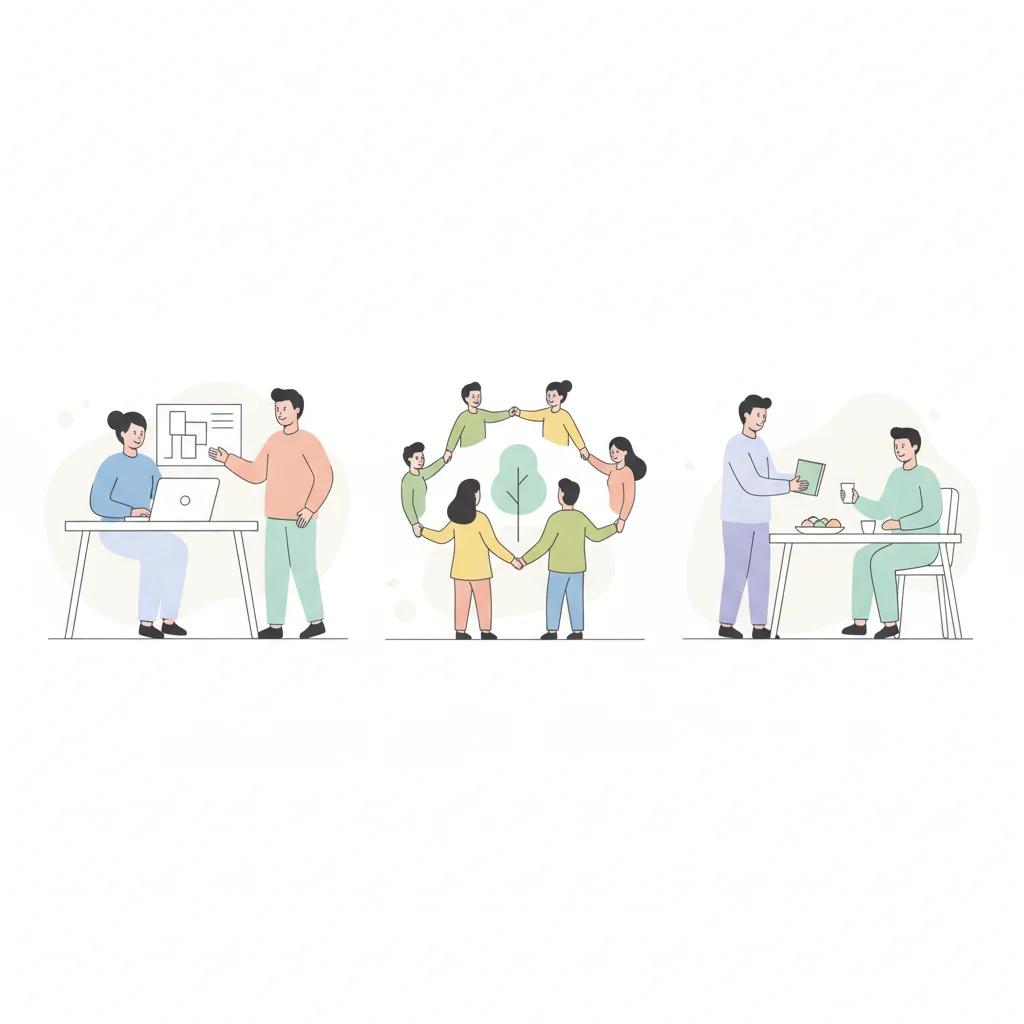
For autistic people, finding employment and integrating into the job market present a unique set of challenges. Difficulties in social communication, understanding unwritten codes in the workplace, and a need for structured routine can be significant barriers. Many autistic adults describe situations of repeated misunderstandings, a feeling of 'mismatch' despite high talent and abilities, or difficulty finding work that suits their specific Spiky Skills Profile.
However, the autistic neurological profile also holds significant advantages for the work environment. Attention to detail, deep Hyperfocus ability, high analytical skills, and a creative approach to problem-solving are just some of the many strengths that autistic people can bring to the table. Many are particularly successful in fields requiring logical thinking, precision, repetitiveness, or specific expertise, when the work environment is adapted to their needs and allows them to realize their unique potential.
Self-advocacy and strategies for preventing Autistic Burnout are essential components for long-term employment success. Learning to set boundaries, identify warning signs of overload, and manage energy wisely are critical steps. This often means learning to say 'no' to requests that exceed capacity or need, or asking for Reasonable Accommodations such as a quieter work environment. These strategies are not luxuries, but necessities to maintain mental and physical well-being and sustain a viable career.
Relationships and Social Support in Autistic Adults
Social interaction and building relationships are a complex area for autistic adults. True friendships and meaningful connections are often built around Special Interests or engaging activities, rather than around small talk which many find unsatisfying or exhausting. Many people describe how they prefer to skip brief conversations and move directly to deeper, more substantive discussions, and often find their 'tribe' among people who share their passions and Special Interests.
Communication presents another challenge, where misunderstandings can easily occur. A tendency to over-explain, in an effort to prevent confusion, can actually create it. Learning effective communication strategies, including presenting context before the main message and verifying understanding, can significantly improve the quality of relationships. Many people learn that it is important to ensure the message has been conveyed and understood as intended, rather than assuming it.
Finding genuine social support requires actively seeking out communities that are accepting and willing to understand neurodivergent communication and interaction styles. Whether in face-to-face meetings or online groups, the importance of meeting other autistic people is crucial. These encounters can provide a sense of relief and deep understanding, as in them, 'strangeness' becomes the norm and it is easier to be who you truly are, without the need for constant Masking.
Maintaining Mental and Physical Well-being in Adulthood
Autistic Burnout is a common phenomenon among autistic adults, and it is a result of constant Masking, exposure to many sensory stimuli, and intense effort to integrate into a world that is not adapted. Burnout can manifest as chronic fatigue, decreased functioning, Hyper Sensitivity, and emotional difficulties. It is of utmost importance to recognize the signs of burnout and take proactive steps to prevent it, such as pre-planning rest times and disconnecting from stimuli.
Managing mental health includes a wide range of strategies, from engaging in enjoyable and relaxing activities to seeking professional support. It is important to identify personal sensory needs and integrate Sensory Processing regulation strategies into daily life, such as using noise-canceling headphones or finding quiet places. Interest-focused social activities, which do not require much social effort, can also contribute to overall well-being without causing Sensory Overload.
Self-awareness and emotional intelligence are not necessarily natural abilities, but they are skills that can be learned and developed over time. The ability to identify internal emotions, understand their causes, and manage them effectively is critical for navigating the complexities of adult life. Many autistic people learn over the years to identify behavioral and emotional patterns, which allows them to respond more consciously and appropriately, instead of being carried away by automatic reactions that do not serve them.
Beyond the Old Model: Rights Change, Approach Evolves
The transition to age 18 marks a turning point in how society and various systems relate to autistic people, and changes the nature of available 'rights' and 'benefits'. While in childhood there is an increased focus on developmental and educational support, in adulthood the emphasis shifts more to employment accommodations, housing support, and independent living management, all from a perspective of ability and potential. The expectation is that people will be able to actively integrate into society, while receiving Reasonable Accommodations that will enable this.
The lack of explicit reference to specific 'rights' and 'benefits' in transcripts of conversations with autistic adults highlights the shift from state guardianship and care to an increased need for self-advocacy and independent navigation. Autistic people are now required to learn how to express their unique needs to employers, service providers, and institutions, and to demand the accommodations they need to succeed. Often, this is a complex demand in a system that does not always understand the nuances of an autistic neurological profile.
The evolving approach to Autism, which recognizes it as part of human Neurodiversity, allows autistic people to be active agents in shaping their lives and demanding more inclusive environments. Through self-advocacy, knowledge sharing, and building supportive communities, it is possible to reduce gaps in existing systems and create a future where rights are not just benefits, but also the ability to live full, meaningful, and independent lives, from a place of acceptance and understanding of who they truly are.
Frequently Asked Questions
What are the main changes when transitioning to age 18 for autistic people?
The main change is the transition from a child-focused system to an adult-oriented system, which often requires more initiative and self-advocacy. The emphasis shifts from direct support to workplace accommodations, independent housing, and social services.
Why is Adult Autism Assessment so common?
Many people, especially women, learn to effectively Mask their autistic traits from a young age. This means that Autism is not identified in early stages, and diagnosis only comes after years of struggles and a feeling of being different.
How can autistic people avoid Autistic Burnout in adulthood?
Avoiding burnout requires self-awareness, setting clear boundaries, planning rest times and disconnecting from stimuli, and developing personal Sensory Processing regulation strategies. It is important to learn to say 'no' when necessary.
What strengths do autistic people bring to the job market?
Autistic people bring strengths such as meticulous attention to detail, high Hyperfocus ability, developed analytical skills, and a creative approach to problem-solving, especially in fields that align with their Special Interests.
How can meaningful relationships be built as an autistic adult?
It is recommended to seek connections based on shared interests, and to focus on direct and honest communication. Finding communities that understand and accept neurodivergent communication styles, whether online or in person, can be very valuable.
Is the term 'Asperger's Syndrome' still relevant for autistic adults?
The term 'Asperger's Syndrome' is no longer used in formal diagnosis. Today, all diagnoses are made under the umbrella of the 'Autistic Spectrum', which recognizes the wide range of autistic experiences as part of one neurological condition.