Unmasking for autistic adults is not just a psychological process, but a true survival journey towards self-acceptance and a full life. Many autistic people spend decades of their lives camouflaging their true identity, constantly trying to adapt to the norms of an environment that is not suited for them. This struggle takes a heavy toll of exhaustion, anxiety, and loss of connection with the inner self. The Social Model of Disability teaches us that the difficulty lies not in a defect in the autistic person, but in the gap between their natural neurological differences and society's demands. When we stop camouflaging and begin to recognize the unique brain structure as it is, the door opens to a life of fulfillment, community, and empowerment.
What is Camouflaging and Why Do We Do It?
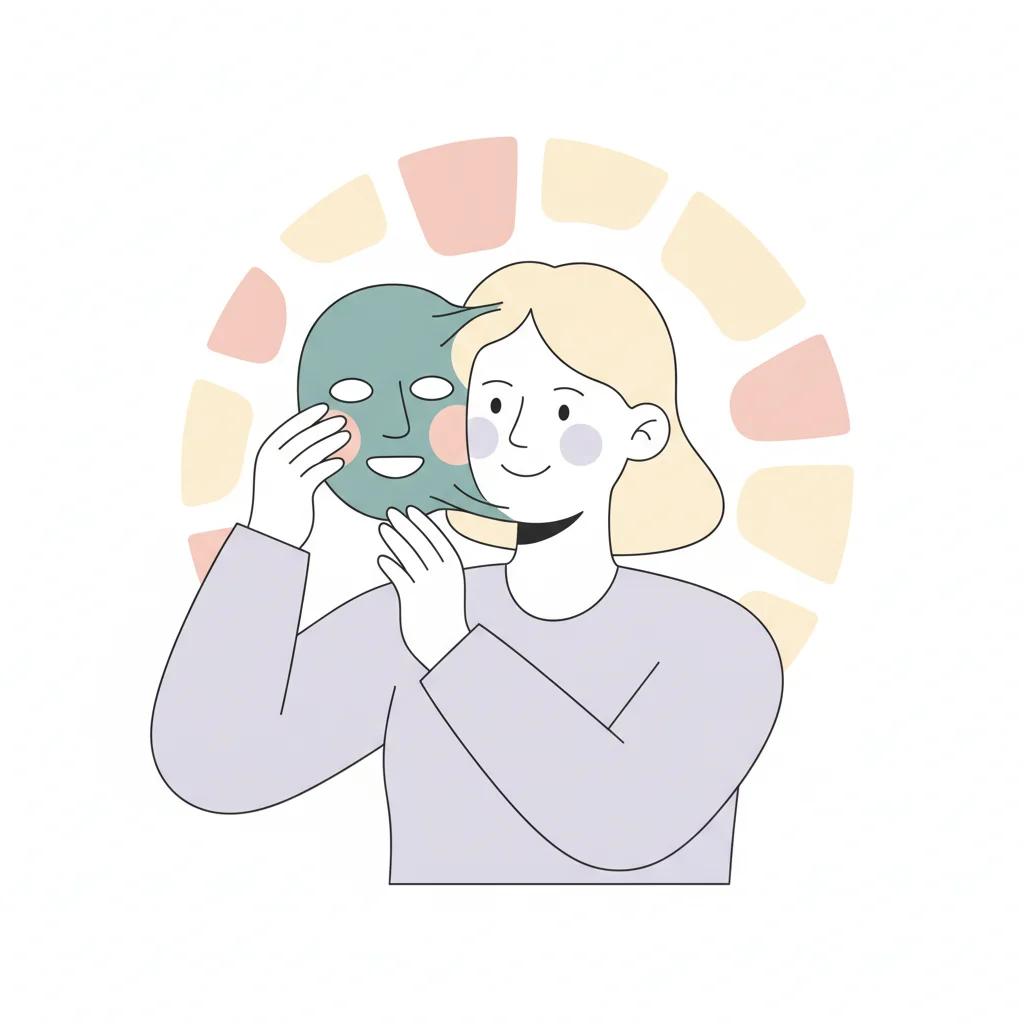
The phenomenon of camouflaging or Masking refers to a conscious or unconscious effort by autistic people to hide their autistic traits in order to fit into society. This effort manifests in various ways, such as forcing eye contact even when it causes physical discomfort, suppressing Stimming that regulates the body, or trying to fake and imitate facial expressions and tone of voice that are considered socially acceptable.
The main reason for camouflaging is survival. Society often shows intolerance even for slight deviations from accepted social norms. Autistic people learn very quickly, often through painful experiences of rejection or bullying, that they must play a role to survive in educational, occupational, and social settings. Communication between people with different neurological variations is like an encounter between different cultures; autistic people sometimes struggle to read the unwritten social codes of the majority, but equally, the environment struggles to show empathy and understand the autistic lived experience. As a result, the burden of adaptation almost always falls on the autistic person.
Gender Differences in Camouflaging and Late Diagnosis
Studies show that autistic women tend to use camouflaging strategies to a greater extent than autistic men. This phenomenon stems in part from social and cultural pressures that expect women to demonstrate higher social skills and adapt to their environment. Women may be more aware of how they are perceived in society and better at suppressing impulses or hiding their Special Interests to appear "normal."
Increased camouflaging in women often leads to devastating consequences for their diagnostic process. Since most traditional diagnostic tools were developed based on observations of boys, symptoms in women are missed or misdiagnosed as personality disorders, anxiety, or eating disorders. Many autistic women receive a diagnosis only in adulthood, after experiencing a mental breakdown due to years of overexertion and constant camouflaging.
The Mental and Physical Cost of Masking
Trying to live someone else's life is an incredibly exhausting process. Autistic people who camouflage themselves report extreme levels of exhaustion and Autistic Burnout. The cognitive effort required to analyze every social situation at any given moment, plan every sentence in advance, and ensure that responses match expectations, drains all energy resources.
Studies indicate a negative correlation between camouflaging and positive emotional expression. The more effort an autistic person invests in camouflaging, the lower their ability to experience and express positive emotions such as joy or enthusiasm. The relentless focus on control and damage limitation extinguishes authenticity and leaves a feeling of emptiness and internal disconnection. Furthermore, camouflaging strategies have been directly linked to an increased risk of depression, suicidality, and a significant reduction in quality of life.
The Deep Connection Between Autism and Anxiety
Beyond exhaustion, Masking and living in an unaccommodating world generate very high levels of anxiety. Data indicates that the vast majority of autistic adults cope with an additional diagnosis of at least one type of anxiety. A deeper look reveals that anxiety is not an accompanying "defect," but a completely natural and logical response to the reality of an autistic person's life.
Social anxiety: Persistent and stubborn fear of social situations. For an autistic person, the fear of humiliation, judgment, or making a social mistake is not an irrational anxiety, but a realistic scenario based on painful past experiences. The anxiety stems from the knowledge that the mask might slip, and that the environment will react with non-acceptance.
Generalized anxiety: Chronic and excessive worry about many areas of life. The experience is sometimes described as the feeling of a primitive person always on alert for an attack by a predator. A brain that constantly produces stress hormones keeps the body in a state of constant survival in the face of the uncertainty presented by the external world.
Agoraphobia: Fear of crowded places. In the autistic context, this fear stems directly from Sensory Overload. Noisy places, full of lights, sounds, and changing textures, pose a real threat to sensory regulation and can lead to a Meltdown. Avoiding these places is a natural physical and mental defense mechanism.
Obsessive-compulsive disorder: Intrusive thoughts and repetitive behaviors. Sometimes the brain clings to specific actions or thoughts as a way to create order, control, and security within social and sensory chaos that is difficult to contain.
Why is the Environment So Overwhelming? A Neuropsychological Perspective
To stop blaming ourselves, it is important to understand the mechanisms at work in the autistic brain. The world is not overwhelming because we are weak, but because our nervous system operates differently. Modern theories explain this through several fascinating angles.
The predictive coding theory suggests that the brain constantly generates a model of the environment and tries to predict the sensory input it will receive. In autistic people, there is a tendency to focus more intensely on the actual sensory input and not just on the general expectation. The gaps between what the brain predicted and what was actually received create prediction errors that the brain constantly tries to correct. This process requires enormous cognitive resources and explains why uncertainty and unexpected changes evoke such high levels of stress and a need for control.
Additionally, the polyvagal theory points to the functioning of the autonomic nervous system. This system is responsible for transitions between a state of safe social engagement, to fight or flight states, and even to a state of disconnection and freezing. In autistic people, there is often a tendency to dysregulate more quickly due to stimuli that the environment perceives as negligible. As a result, emotional Meltdowns or complete disconnections occur, which are a desperate attempt by the body to protect itself from overload.
When Does the Mask Crack? The Importance of Developmental Context
Autism is a congenital neurological condition that accompanies a person throughout their life, but the way it manifests changes at each developmental stage according to environmental demands. Many mistakenly believe that if a person did not show clear signs in early childhood, they are not autistic. The reality is much more complex.
For many autistic people, especially those without intellectual disability and with typical language abilities, early childhood years may pass relatively smoothly in a protective and supportive environment. However, when social demands become more complex, usually around adolescence or the transition to adult life, the ability to compensate and camouflage collapses.
In adulthood, the need to manage a career, maintain complex romantic and social relationships, and regulate emotions completely independently without the safety net that existed in childhood, causes extreme stress. At this point, the difficulty in keeping pace with a world governed by Neurotypical codes leads to isolation, occupational difficulties, and sometimes even relationship breakdowns. Only when the compensatory systems are completely worn out does suspicion usually arise, and the stage of Adult Autism Assessment arrives.
The Path to Self-Acceptance and Unmasking
The first step towards self-acceptance is adopting the Social Model of Disability and stopping the use of pathological language that presents Autism as a tragedy or a disease to be cured. Autism is not a disability, but a natural variation in the human fabric. As part of this process, we must abandon harmful labels such as high- or low-functioning, which completely ignore the varying support needs of each person. A person can have high verbal and intellectual abilities, and still require significant support in sensory regulation and daily functioning.
To stop camouflaging, we must first give a place of honor to our identity. This means using identity-first language, meaning choosing to identify as an autistic person rather than a person who "carries" Autism as an unwanted side bag. We reject outdated symbols like the puzzle piece, which convey that we are broken or incomplete, and embrace the infinity symbol representing the broad and infinite diversity of the human spectrum.
Part of Unmasking also requires rejecting aggressive behavioral therapies whose sole purpose is to normalize the autistic person and teach them how to suppress their original nature. Therapies based on blind obedience and suppression of Stimming cause deep psychological harm. Instead, we must demand Reasonable Accommodations and acceptance-based therapies, which work with the autistic person and not against them, and provide them with tools for managing stress, anxiety, and sensory regulation in a safe space.
The journey to Unmasking is long, painful, and sometimes frightening, as it exposes us to the world in a vulnerable way. But only from this exposure, and from a community environment that understands the experience from within, can we build an authentic life, find true belonging, and understand that there is no need to fix someone who was never broken.
Frequently Asked Questions
What is the phenomenon of camouflaging (Masking) in autistic adults?
The phenomenon of camouflaging or Masking refers to a conscious or unconscious effort by autistic people to hide their autistic traits in order to fit into society. This effort manifests in various ways, such as forcing eye contact even when it causes physical discomfort, suppressing Stimming that regulates the body, or trying to fake and imitate facial expressions and tone of voice that are considered socially acceptable.
Why do autistic adults camouflage, and what are the consequences of this phenomenon?
The main reason for camouflaging is survival; society often shows intolerance even for slight deviations from accepted social norms, and autistic people learn that they must play a role to survive. The consequences of camouflaging include extreme exhaustion, Autistic Burnout, impaired ability to experience and express positive emotions, feelings of emptiness and internal disconnection, and an increased risk of depression, suicidality, and a significant reduction in quality of life.
What are the gender differences in the phenomenon of camouflaging in autistic people, and how do they affect diagnosis?
Autistic women tend to use camouflaging strategies to a greater extent than autistic men, due to social and cultural pressures. Increased camouflaging in women often leads to devastating consequences for the diagnostic process, as symptoms may be missed or misdiagnosed, and many receive a diagnosis only in adulthood.
How do camouflaging and living in an unaccommodating world contribute to the emergence of anxiety in autistic adults?
Masking and living in an unaccommodating world generate very high levels of anxiety. Most autistic adults cope with an additional diagnosis of at least one type of anxiety. Anxiety is not an accompanying "defect," but a natural and logical response to the reality of life, manifesting as social anxiety (fear of judgment or mistakes), generalized anxiety (chronic worry), and agoraphobia (fear of crowded places due to Sensory Overload).