Understanding sociality among autistic people requires a deep and unbiased perspective. It is not a single way of interacting, but a broad spectrum of unique experiences, preferences, and challenges. For many on the Autistic Spectrum, navigating the social world may appear different from that of the majority of the population, but this does not indicate a lack of desire or ability to form meaningful connections. In fact, there are many profound and authentic ways in which autistic people form and nurture relationships. The following article offers a journey into these complexities, with the understanding that neurodiversity brings with it richness and valuable perspectives.
In practice, social experiences among autistic people are often characterized by a deep desire for connection, but also by challenges related to understanding and applying complex social norms. Encountering the world can be an energetically draining experience, requiring conscious effort to interpret subtle cues and unspoken expectations. At the same time, the Autistic Spectrum also holds special and unique ways of connecting, leading to loyal friendships and deeply profound relationships. The key to understanding lies in focusing on the individual, their needs, and their strengths, rather than trying to fit them into social molds that do not suit them.
Unique Communication in a Neurotypical World
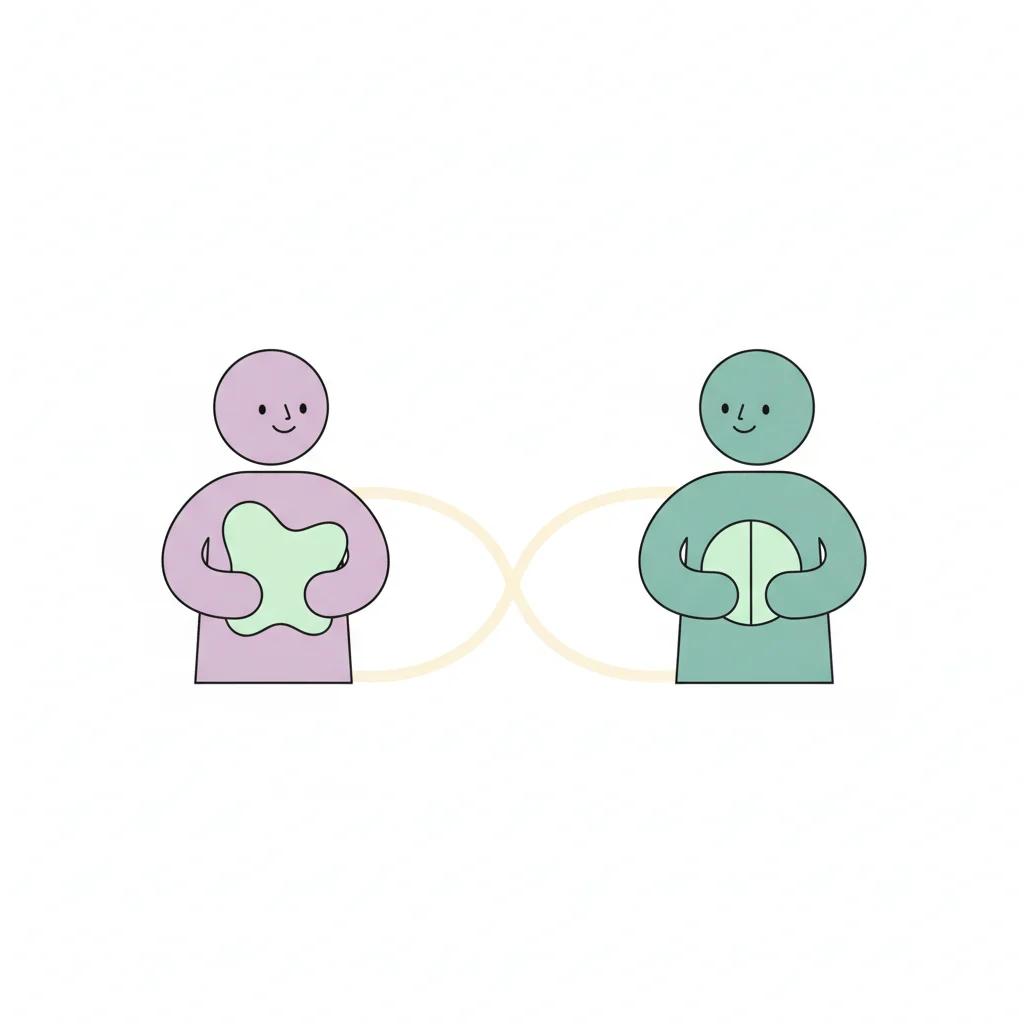
Communication is a cornerstone of any social interaction, but for many autistic people, it can present unique difficulties. Autistic people often describe the challenge of understanding non-verbal social cues, facial expressions, or tone of voice, which are perceived as natural for most of the population. This situation can lead to interactions that seem uncomfortable or unnatural, even when the intention is good and sincere. Understanding these challenges is the first step to creating inclusive and respectful communication spaces.
One of the prominent characteristics of this unique communication is the need to explain things in great detail, a phenomenon sometimes referred to as "over-explaining." Many autistic people may send long messages or detailed emails in an attempt to clarify a situation or explain their actions. The intention behind this behavior is often to prevent misunderstandings and ensure that the other party receives full information, but in many cases, providing excessive details can actually create confusion or be perceived negatively. It is important to understand that the detailed explanation stems from a clear desire to avoid misunderstanding and to accurately convey the message transparently. Lack of clarity in communication sentences may sound technical but it is very important for readers to understand the content.
Furthermore, many autistic people prefer direct and honest communication, and tend to skip what is perceived as "small talk" or unnecessary introductions. They prefer to get straight to the point, out of a desire to create a deep and real connection based on truly interesting topics. This approach, which is authentic and energy-efficient for them, can sometimes be perceived as impoliteness or lack of interest by neurotypical people. The key to bridging these communication gaps lies in recognizing diversity and developing mutual patience and understanding. For example, many autistic friends report that they may forget to say "hello" or "goodbye" at the beginning or end of an interaction, not out of disrespect, but because their primary focus is on the content of the conversation rather than the details of social protocol.
True Friendship and the Search for a Neurodivergent Tribe
The journey of building friendships can be complex for autistic people, but when these connections are formed, they are often characterized by unparalleled depth, loyalty, and authenticity. Many people describe the difficulty of finding a true connection in a world that does not understand their unique ways of communication and interaction. The feeling of being the "ugly duckling," as many call it, of not fitting into the environment and social norms, can be draining and isolating. However, the moment a person discovers their "tribe" - a community of people who share the same neurological profile or similar understanding - is a life-changing moment.
Autistic social spaces, whether in face-to-face meetings or online communities, offer a unique experience unlike anything else. In these places, conventional social expectations fade, and a space is created where people can truly be themselves. These gatherings are often characterized by skipping small talk and quickly moving to deep and meaningful topics of interest. The desire for a real and unmasked connection is prominently expressed, and the discourse focuses on what truly matters, without the need to play roles or recite social scripts. This shift from fixed social scripts to authentic conversation creates a less awkward experience and allows for a deeper connection.
These connections are often built around shared Special Interests - from specific hobbies to a common engagement with deep and complex topics. When people find others who share their deep interests, a strong platform is created for building friendships based on mutual understanding and genuine respect. The effort invested in finding these connections ultimately pays off, as it leads to the creation of a strong and meaningful social support network. Many autistic people report that finding their "tribe" has given them a sense of belonging, understanding, and acceptance that they had not experienced before. These connections are experienced as deep and meaningful, as they allow people to be who they are without the need for external adaptation. Without the need for Masking, the available energy can be directed towards building the relationship itself.
Social Masking and the Cost of Conformity
One of the common characteristics among autistic people, especially among autistic women, is social Masking, or "Camouflaging." This is a strategy where a person changes their behavior, speech, and expressions to conform to neurotypical social norms and avoid attracting negative attention or judgment. This phenomenon often stems from a desire to fit in, avoid rejection, or succeed in social situations perceived as essential, such as work or studies. Masking can be so skilled that people may live for many decades without anyone, including themselves, noticing their neurological profile.
Social Masking requires an enormous investment of cognitive and emotional energy. It is a constant process of analysis, imitation, and self-control, affecting all areas of life. Many people describe feeling like a "chameleon," changing its color according to the environment - adopting a different personality with different groups of people. This behavior, sometimes done instinctively and unconsciously, can lead to a loss of self-identity. It is difficult to know who you truly are beneath the mask, and what your authentic preferences, desires, and personality are, when so much energy is invested in conforming to external expectations.
The cost of social Masking is extremely high, and it manifests in chronic fatigue, exhaustion, and even Autistic Burnout. When a person continuously masks, they suppress their natural needs and expressions, living in a state of constant stress. This can lead to emotional or physical collapse, when the body simply cannot bear the burden any longer. It is important to recognize that Masking is not an easy choice, but often a survival strategy acquired over years of trying to fit into a world not structured for the person's unique needs. Recognition and understanding of social Masking are critical for building a supportive society that encourages people to drop their masks and live authentically.
Energy Management and Mental Well-being in Relationships
Social interaction requires significant energy resources from every person, but for autistic people, this demand can be particularly high. Environmental noise, the need to process complex social information, and the constant effort to navigate social expectations can lead to deep exhaustion. Many autistic people sometimes compare themselves to a fast race car - capable of operating at high intensity, but needing well-planned pit stops for recharging and recovery. Without such "pit stops," the risk of Autistic Burnout increases dramatically.
Social energy management is an essential skill for mental well-being. It includes recognizing personal limitations, understanding when and how to reduce exposure to social stimuli, and strategically planning recovery times. Many people find comfort and recharging in intentional solitude, in quiet areas, or by engaging in Special Interests that allow them to disconnect from the external world. This can be spending time in nature, reading a book, or any other activity that does not require intense social interaction. Using headphones, for example, can help regulate auditory stimuli in public spaces and allow for more relaxed functioning. This does not indicate a lack of social interest, but a basic physiological need for stimulus regulation.
Learning to say "no" to social requests or additional commitments is an important step in protecting energy reserves. This is not a selfish act, but a necessity for maintaining balance and mental health. Many autistic people experience difficulty setting boundaries, sometimes out of a desire to please others or avoid conflict. However, recognizing the importance of energy management allows them to develop skills of assertiveness and conscious choice, which serves their long-term well-being. This is a process of personal development that enables them to live full and meaningful lives, while preserving their strength. These strategies are not related to performance but to managing energy resources.
Love and Relationships in Neurodivergent Relationships
Romantic relationships are an important component of many adults' lives, and here too, autistic people bring with them a wealth of unique experiences, challenges, and strengths. The understanding that both partners, or one of them, may be on the spectrum, requires open communication, deep honesty, and a willingness to let go of preconceived notions about how a relationship "should" look. Neurodivergent relationships flourish when there is mutual recognition of diversity and a shared pursuit of building bridges of understanding. The main thing to understand is that it is not about "fixing" or "curing" a partner, but about accepting and loving the person as they are.
Communication challenges, often characteristic of the spectrum, can also manifest in romantic relationships. For example, difficulty interpreting non-verbal cues, the need for direct and clear verbal communication, or sensitivity to specific sensory stimuli, can create friction. However, when both partners learn to adapt their communication styles to each other, and to respectfully address each other's unique needs, these challenges can become strengths. A willingness to quickly raise problems and consciously resolve them, rather than letting them escalate into major crises, is an effective strategy. This approach encourages honesty and transparency, thereby strengthening the relationship.
The phenomenon of "overcompensation" - an excessive attempt to invest in a relationship that is not rewarding or suitable - can also occur in the romantic sphere. Many autistic people, out of a strong desire for connection, may invest enormous efforts in relationships that are unhealthy or do not match their needs. Identifying these behavioral patterns and learning to release relationships that do not serve their personal good is an essential skill. Building a real and sustainable relationship requires self-honesty about personal needs, and the ability to choose partners who respect and appreciate the person in all their complexity. Ultimately, love flourishes in an environment of acceptance, understanding, and mutual growth, without the need for Masking.
Autistic Strengths in the Social Sphere
While autistic people may face certain challenges in the social sphere, it is important to emphasize that they also bring a unique set of valuable strengths and contributions. These strengths, when recognized and nurtured, can significantly enrich the social world of individuals and those around them. One of the prominent characteristics is a high pattern recognition ability - seeing the world in terms of connections and a deep understanding of complex systems. This ability can make conversations about shared Special Interests fascinating and unusually profound, as people are able to see details and connections that others miss.
Another characteristic is attention to detail. Many autistic people excel at the ability to focus deeply on a particular topic and delve into minute details. When this attention is directed to a shared Special Interest, it can lead to fascinating conversations and the creation of deep connections based on shared exploration and mutual appreciation for knowledge. Loyalty and authenticity are also prominent traits; many autistic people value honesty and integrity in relationships, and tend to be loyal and supportive friends. They are not prone to social games or manipulations, and prefer direct and clear relationships. This is a valuable quality in a social world that can sometimes be complex and full of masks.
Moreover, many autistic people demonstrate resilience to social pressure. They are less likely to succumb to group expectations or conform merely out of a desire to please others. This trait allows them to maintain their authenticity and create relationships based on who they truly are, rather than on an external image. It gives them the freedom to be themselves, even when that means being different from the mainstream. Ultimately, autistic sociality is not lesser, but different - rich in authenticity, depth, and meaningful connections built on mutual understanding and respect. The key lies in recognizing and appreciating these unique ways of connecting, which enrich the entire social fabric.
Frequently Asked Questions
What is the recommended approach to understanding sociality among autistic people?
The recommended approach is a deep and unbiased perspective, with the understanding that it is a broad spectrum of unique experiences, preferences, and challenges, rather than a single way of interaction.
Do autistic people not want or are they unable to form meaningful connections?
No, this does not indicate a lack of desire or ability to form meaningful connections. Autistic people form and nurture relationships in many deep and authentic ways.
What are the common communication challenges among autistic people?
Autistic people often describe the difficulty of understanding non-verbal social cues, facial expressions, or tone of voice, as well as a need to explain things in great detail ("over-explaining") to prevent misunderstandings.
How is direct and honest communication characterized in autistic people, and why might it be perceived negatively?
Many autistic people prefer direct and honest communication and tend to skip "small talk," out of a desire to create a deep and real connection. This approach, which is authentic and energy-efficient for them, can sometimes be perceived as impoliteness or lack of interest by neurotypical people.
What is the "neurodivergent tribe" and how does it contribute to friendship for autistic people?
The "neurodivergent tribe" is a community of people who share the same neurological profile or similar understanding. Such social spaces offer an experience where conventional social expectations fade, and a space is created where people can truly be themselves, building deep connections based on shared Special Interests and mutual understanding.