
Infantilization is a social and psychological phenomenon where an adult is treated, spoken to, or managed as if they were a small child or infant. It is a paternalistic behavior pattern that diminishes the person, strips them of their dignity and autonomy, and deprives them of the right to make decisions about their life.
Within the neurodiversity community and among people with disabilities, infantilization is one of the most common and destructive expressions of institutional and social Ableism and Sanism.
How is Infantilization expressed in daily life?
Baby Talk: Using a childish, exaggerated, or overly slow tone, and vocabulary intended for toddlers, when addressing an autistic adult or a person with a disability.
Bypassing the person in conversation: Addressing the companion, partner, or parent instead of speaking directly to the person themselves, based on the preconceived notion that they "are unable to understand" or respond (while ignoring AAC during Situational Mutism).
Nullifying free choice: Making decisions for the person on personal matters such as what to wear, what to eat, how to manage their money, or with whom to have relationships, from a paternalistic approach that "knows better than them."
Media representation: A tendency to portray neurodivergent characters in films and series as eternal children, lacking sexual urges, or needing constant protection.
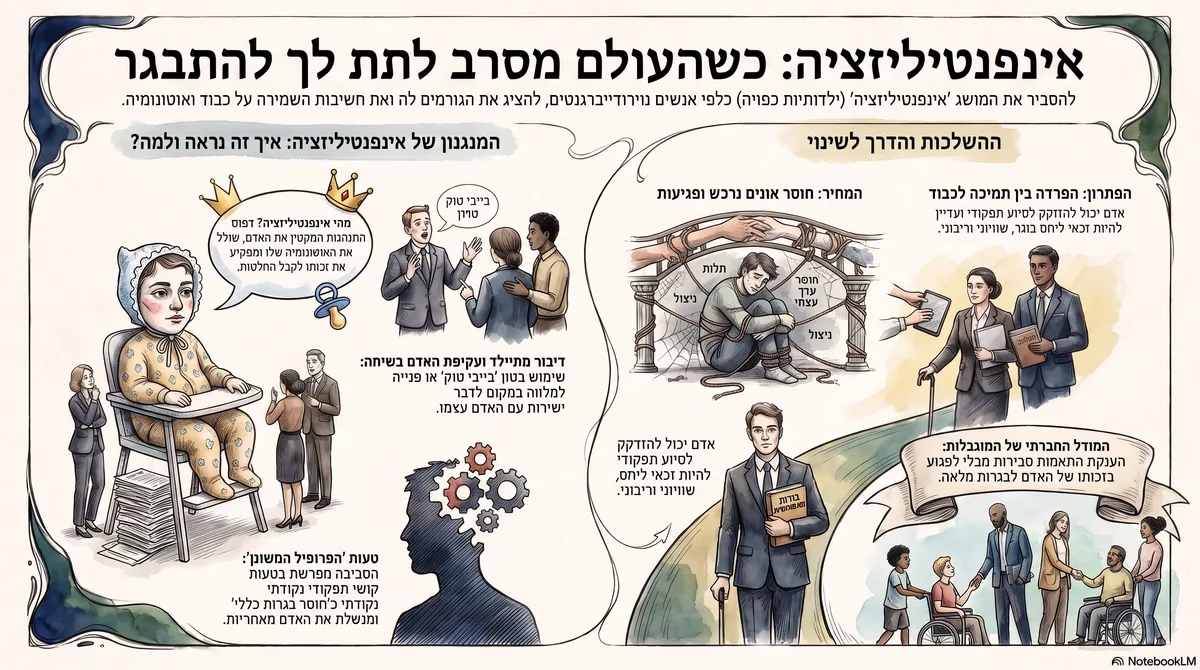
The Source: A Misconception of the Spiky Skills Profile
Infantilization often stems from a mistaken interpretation of the Spiky Skills Profile:
The Challenges (the valleys): A neurodivergent person may experience severe difficulties in Executive Functioning (such as difficulty with bureaucracy), reach Analysis Paralysis, or require support in household management.
The Social Failure: Society interprets the specific functional difficulty as "general immaturity," and instead of providing targeted Reasonable Accommodations, it strips the person of responsibility for all other areas of life - including those in which they excel.
The Psychological Cost and Dangers
Learned Helplessness: As a result of society rushing to "do it for them," the person may stop trying to perform tasks they are actually capable of, which increases dependence on others.
Internalized Ableism and Impostor Syndrome: Repeatedly hearing diminishing messages causes the person to doubt their abilities, harm their self-worth, and feel constant anxiety in the adult world.
Increased Vulnerability to Exploitation: Stripping the person of the right to set boundaries and say "no" leaves them particularly vulnerable to financial, emotional, and sexual exploitation, and painful experiences of Mate Crime.
The Accepting Approach: Separating Support from Dignity
According to the Social Model of Disability, the solution to infantilization is a complete separation between the need for support and the right to adulthood: a person can need functional assistance or sensory regulation, and still be entitled to respectful, equal, and adult treatment, allowing them to undergo a healthy process of Unmasking and maintain full sovereignty over their life.