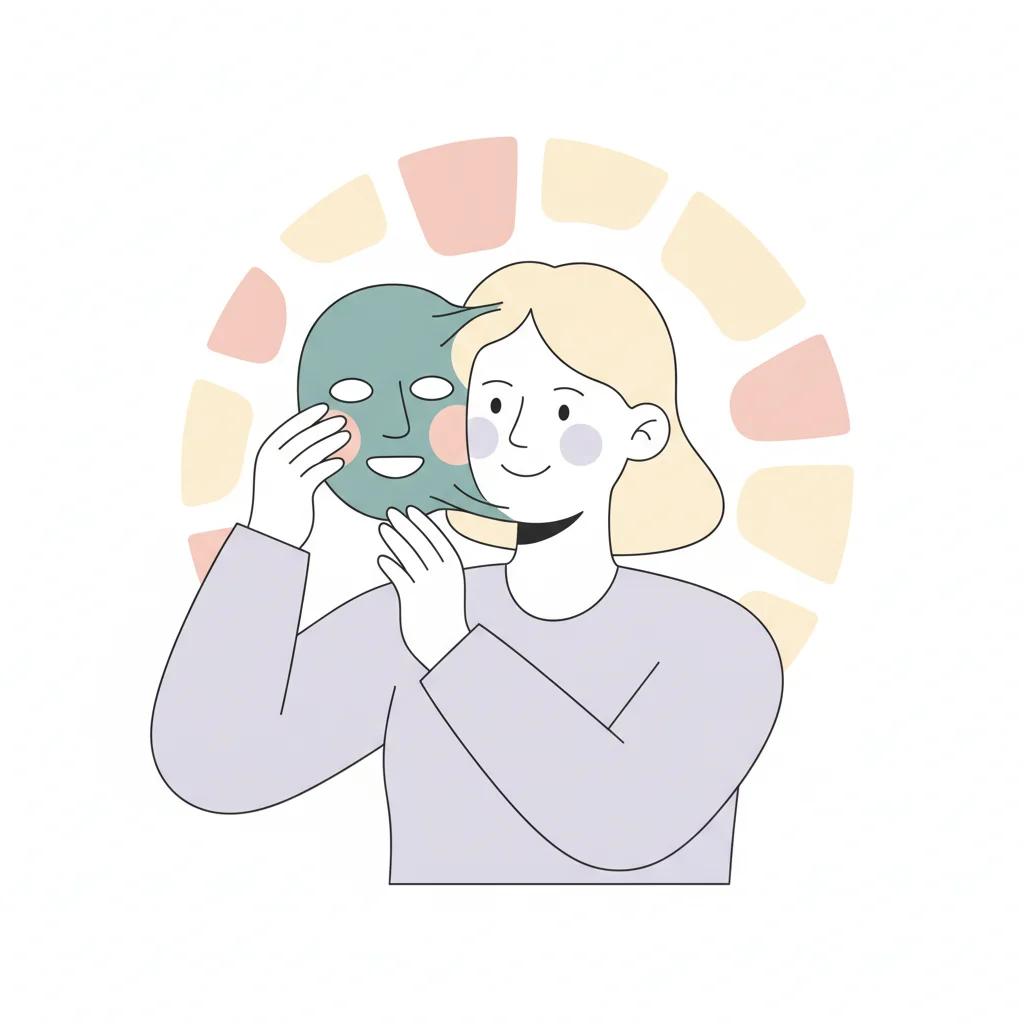
Unmasking is a complex psychological, behavioral, and identity-based process in which an autistic or neurodivergent person consciously and gradually stops using social Camouflaging and Masking mechanisms. In this process, the person learns to identify, accept, and express their authentic self, their neurological, sensory, and emotional needs, instead of expending exhausting energy trying to "appear neurotypical" to please their environment.
Unmasking is not a one-time action but an ongoing journey, forming a fundamental building block in the transition from internalized ableism and Impostor Syndrome towards self-acceptance and mental well-being.
Key Stages in the Unmasking Process
Identifying and Separating the Mask from the Self:
After years of automatic camouflaging (and often following a late diagnosis), the person needs to ask themselves: "Where does the character I played end, and where do I begin?" This stage includes deconstructing planned conversation scripts, understanding the motives behind forced eye contact, and identifying patterns of excessive people-pleasing.
Restoring Sensory and Bodily Regulation:
Returning to listening to the body's signals (the sense of Interoception) and fully legitimizing previously suppressed physiological needs:
Giving full freedom to engage in Stimming (repetitive movements) to release neurological tension.
Openly and unashamedly using sensory aids (like noise-canceling headphones or sunglasses) to prevent Sensory Overload.
Respecting the body's signals for rest to prevent deterioration into a Sensory Hangover or Meltdowns and Shutdowns.
Adopting an Authentic Communication Style:
Stopping the mental effort to decipher exhausting social codes (within the framework of the Double Empathy Problem) and transitioning to direct, honest, and Literal Thinking communication. This includes making space for Info Dumping around Special Interests and seeking interactions based on demand-free Parallel Play.
Why is this process essential? (Healing from Burnout)
Prolonged camouflaging acts like the Coka Cola Bottle Effect - it maintains an appearance of functioning but completely depletes a person's "spoons" (according to Spoon Theory). Unmasking is the only remedy for chronic Autistic Burnout. It dramatically reduces anxiety and depression levels, allowing the nervous system to exit a constant "fight or flight" state (often exacerbated by comorbidities like EDS or POTS).
Challenges and Risks of Unmasking
Unmasking is not a simple process, and it involves confronting rigid social structures:
Environmental Reaction and Infantilization: When a person stops masking and begins to display overt autistic characteristics (such as avoiding eye contact or Stimming), the environment may mistakenly interpret this as a "decline in functioning" or immaturity, and react with judgment or Infantilization.
Minority Stress and Exposure to Ableism: The mask served as a shield against discrimination, ridicule, or ostracism. Removing it exposes the person to direct Ableism in workplaces or studies, and sometimes leads to dramatic changes in existing relationships that did not know their authentic self.
Coping with Inertia and Analysis Paralysis: Without the rigid "rules" of the mask that defined how the person should behave, they may temporarily experience an increase in Autistic Inertia and Analysis Paralysis, as they learn to rebuild their life based on their true desires.
Safe and Context-Dependent Unmasking
Due to social risks, the neurodivergent community emphasizes that unmasking does not have to be absolute and in every place. It is about developing autonomy and free choice:
The person learns to completely unmask in safe spaces (at home, with neurodivergent friends, or in the community), and chooses to use conscious and controlled Masking only as a temporary protective tool in inaccessible places. Simultaneously, the process includes moving from an internal attempt to "compensate and hide" the difficulty, towards an active and legitimate demand from society to provide Reasonable Accommodations and accessibility, allowing every person to live with dignity and authenticity.