
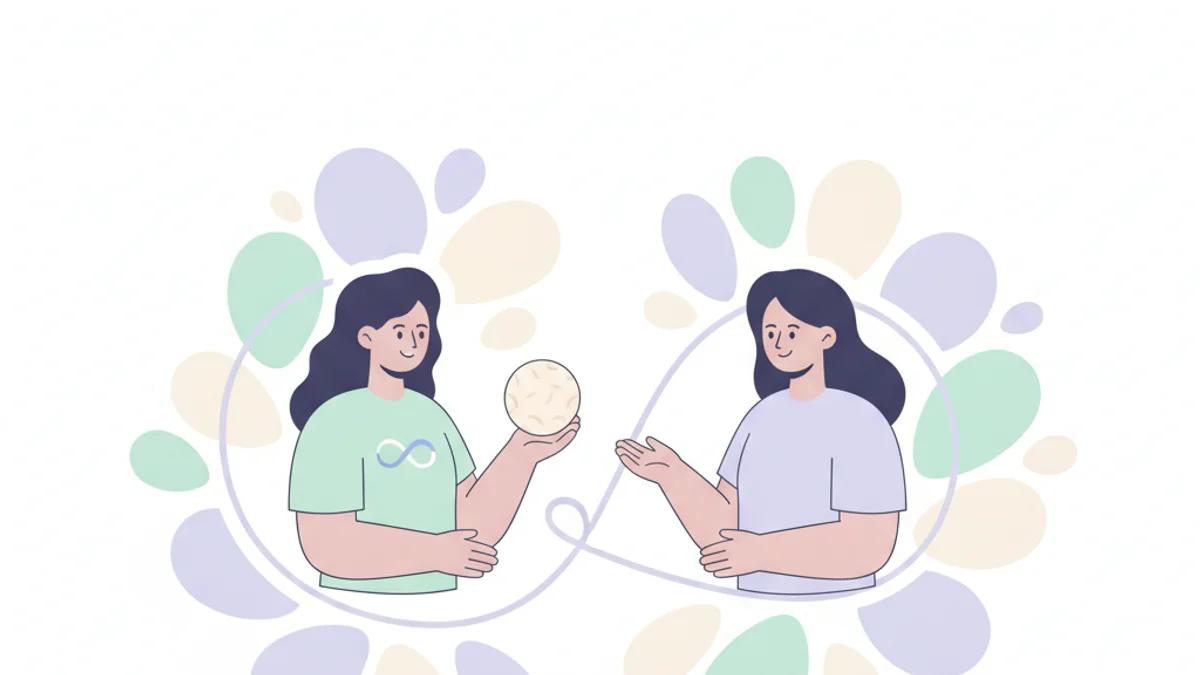
Many misconceptions exist about how autistic people form and maintain social connections. Often, these friendships are perceived as superficial, fragile, or lacking depth. However, many autistic adults describe their friendships as deeply meaningful and highly important in their lives. A new study aims to examine this topic from the unique perspective of autistic adults themselves, providing important insights.
The study, published in the journal Autism, 2026 Sep, explored autistic perspectives on friendship through joint interviews with pairs of friends - autistic adults and their friends (autistic and non-autistic). The researchers used inductive thematic analysis, adopting a neurodiversity-affirming approach and a 'Double Empathy Problem' model, to deeply understand the meaning of these relationships.
The findings challenge models that view autistic social connections from a deficit perspective, highlighting these friendships as complex forms of relationships based on autistic strengths and values.
What Defines Autistic Friendship?
- Participants described friendships as reciprocal, chosen, and founded on acceptance, authenticity, and flexible mutuality, in contrast to neurotypical social expectations.
- The quality of friendship was defined by the depth of understanding and emotional connection, rather than by the frequency of interaction or physical proximity.
- Among the central themes that emerged, it appears that acceptance and authenticity support Unmasking - the ability to be oneself without needing to pretend, mutual understanding, adaptive reciprocity, and a sustained connection over time.
- Friends supported each other emotionally, adapted to each other's needs, and maintained contact in ways that worked for them.
For autistic adults in Israel, these findings provide important validation for the personal experiences of many. They remind us that true friendship does not depend on specific social performances or meeting external expectations, but rather on the ability to be true to yourself, to be accepted as you are, and to find a deep and genuine connection. The ability to Unmask and be authentic in a supportive friend environment is a critical component for mental well-being and healthy social relationships.
This study, therefore, not only refutes stereotypes but also empowers the autistic narrative, illuminating the richness and complexity of social connections on the Autistic Spectrum.