
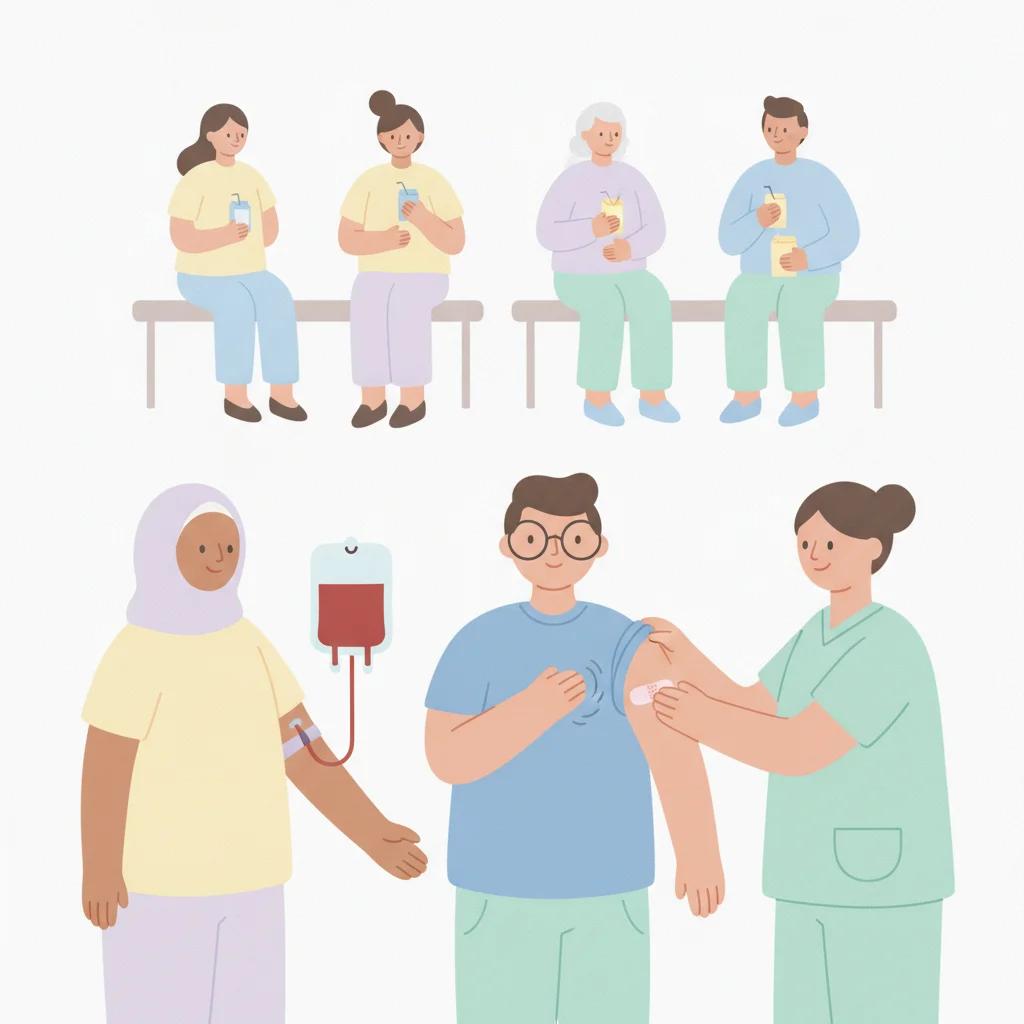
Blood donation is an important act that helps save lives and ensures the availability of blood for the healthcare system. The Autistic.co.il portal recognizes the importance of full inclusion of autistic people in all areas of life, including contributing to the community. A study published in Transfusion, 2026 Aug, sheds light on the experiences of neurodivergent people in the blood donation process and points to significant challenges that need to be addressed.
Is the blood donation process accessible to everyone?
The study focused on examining the broad framework of blood donor diversity, with specific reference to the neurodivergent population. The researchers hypothesized that neurodivergent people would be underrepresented among blood donors, would donate less frequently, would perceive the donor selection process as less fair and more discriminatory, would be more likely to guess answers to survey questions, and would find these questions emotionally distressing.
The study involved thousands of participants completing online questionnaires - both from the general public and existing blood donors. Participants reported whether they had been formally or self-diagnosed with Autism, ADHD, or Dyslexia. They answered questions about travel, social, and health behaviors as they would during a donation, and indicated whether the questions were emotionally distressing, whether they were appropriate and necessary for recipient safety, and whether their answer was a guess or accurate. They also reported their perception of the fairness of the selection process and their donation frequency.
Study Findings: Underrepresentation and Barriers
- Underrepresentation and Donation Frequency: The study findings showed that neurodivergent donors reported fewer donations and were significantly underrepresented among blood donors (7.6% of donors compared to 13.3% of non-donors).
- Difficulty with Screening Questions: Neurodivergent people, whether they had donated blood or not, indicated that they were more likely to guess answers to survey questions, especially when it came to questions about travel history. They also reported that these questions were more emotionally distressing for them.
- Feeling of Discrimination and Unfairness: All neurodivergent participants reported that they perceived the blood donor selection process as less fair and more discriminatory.
These findings indicate that neurodivergent people, including autistic people, encounter inherent barriers in the blood donation process. Difficulty with screening questions, the tendency to guess due to lack of clarity or difficulty understanding the context, and the feeling of unfairness may deter them from donating. It is important to note that the findings were collected through online questionnaires, which may affect the nature of the responses.
In light of the findings, the researchers emphasize that blood services should implement Reasonable Accommodations to enable neurodivergent people to join the donor pool and contribute significantly, while ensuring the safety of blood recipients. These accommodations may include changes in question wording, making information more accessible, or providing better support during the screening process. The more accessible we make the donation process, the greater the chance that autistic people can contribute to the community in this meaningful way.