
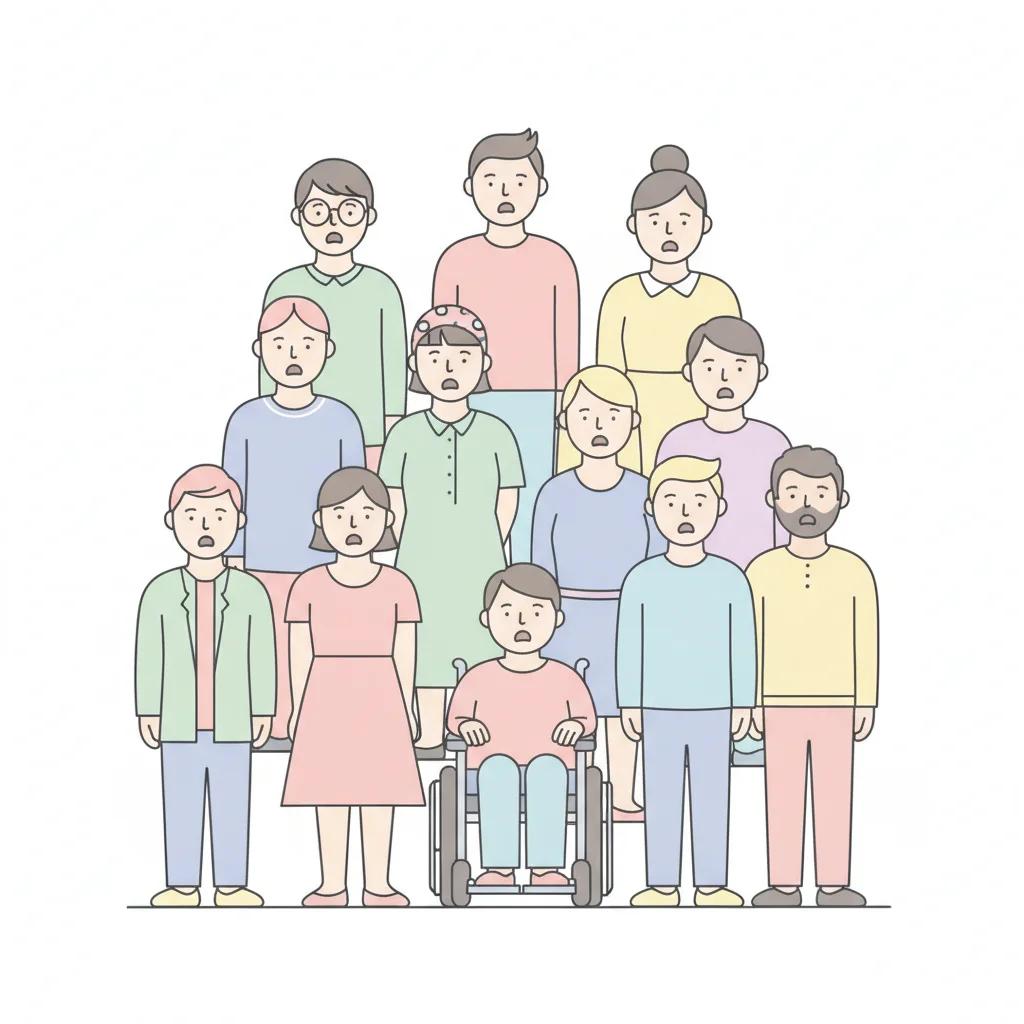
The Neurodiversity paradigm views social difficulties encountered by autistic people as often resulting from a lack of mutual understanding between different neurological types, rather than inherent deficits in the autistic person. This approach emphasizes the need to create inclusive spaces and educate the public about Autism - a task that remains challenging.
Encounter Through Voice and Song
A study published in the journal Autism, 2026 Aug, examined whether participation in a shared musical activity could reshape how people perceive Autism. As part of the study, 12 adult singers participated in choir rehearsals for six months. They sang alongside eight autistic teenagers and three Autism professionals.
Researchers evaluated the development of the adult singers' perceptions of Autism using questionnaires administered before and after their participation in the choir.
Promising Findings
The results indicate that participants' perceptions of Autism became richer and more accurate. They aligned significantly with a "difference" model instead of a "deficit" model. That is, participants began to view Autism as a different way of existing rather than a deficiency. Furthermore, after this shared experience, participants felt more capable and willing to interact with other neurodiverse people.
Implications of the Findings for an Inclusive Society
These preliminary findings support the Neurodiversity paradigm and offer promising avenues for addressing the "Double Empathy Problem" - the idea that communication difficulties stem from a lack of mutual understanding between autistic and non-autistic people. They emphasize the importance of creating inclusive spaces within our society and demonstrate how choir singing can be a unique tool for promoting inclusion.
For autistic adults in Israel, this research can offer hope and even a model. It shows how direct, shared, and experiential encounters can change fixed perceptions, reduce prejudices, and build bridges of mutual understanding. This is a reminder of the power of shared activities in creating a more accepting and supportive society.
It is important to note that these are preliminary findings, and further research is needed to confirm and expand upon them.