
Authentic Involvement-Talent Development
Extended Reality (XR) technologies, including Virtual Reality (VR), have long been studied as supportive tools for autistic people and other neurodivergent individuals. However, the development of these tools often relies primarily on the researchers' perspective, and less on the authentic needs and experiences of the users themselves. Collaborative and co-design approaches offer a solution to this gap, allowing neurodivergent people to be meaningfully involved in the development process.
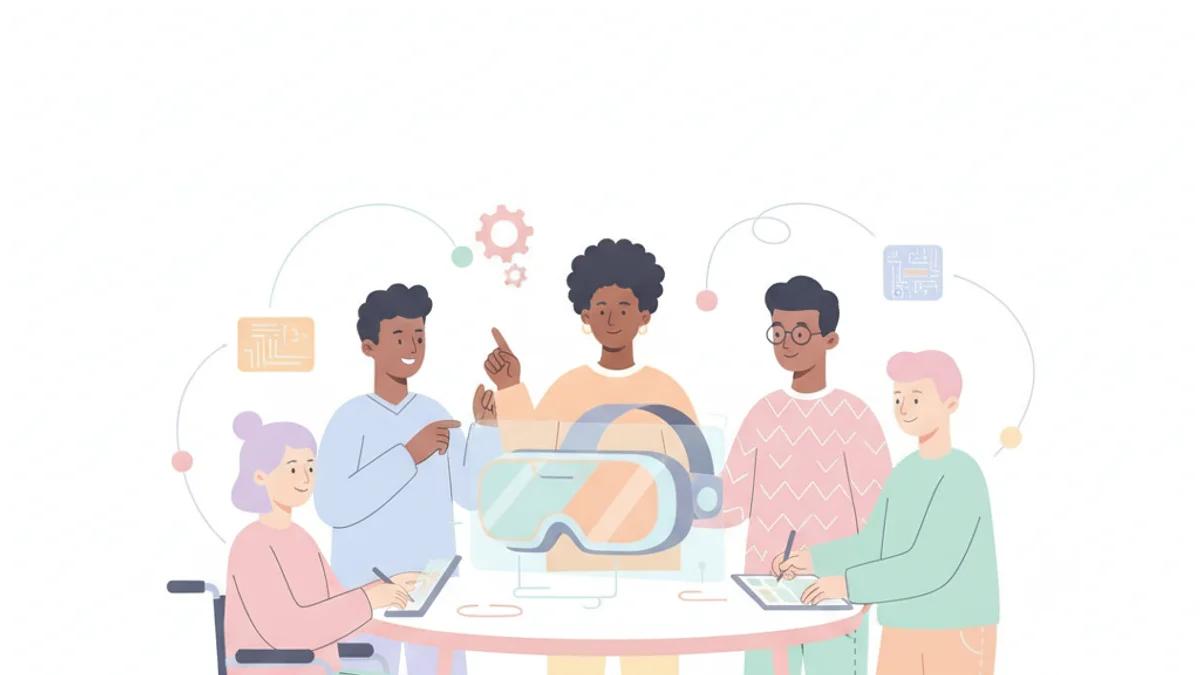
A study published in the journal Autism, 2026 Oct, examined the experiences of five neurodivergent adults who actively participated as paid members of a university development team. They were partners in the co-creation of 'uSucceed' - a VR learning environment designed to teach cybersecurity skills.
Learning, Growth, and a Sense of Belonging
The developers participating in the study were interviewed in depth about their expectations, what they learned, their responsibilities in design, collaboration with the team, and the impact the experience had on them. Analysis of the interviews revealed interesting findings:
- Technical Skill Development: Participants reported significant growth in a variety of technical skills, including Unity development, C# coding, debugging, and animation.
- Life Skills and Broader Abilities: In addition, improvements were noted in skills such as communication, perseverance, and reflective problem-solving.
- Self-Confidence and Ownership: The supportive and inclusive work environment, along with structured learning support and real production-level responsibility, fostered self-confidence, project ownership, and a sense of value among participants. Clear guidance, frequent check-ins, collaborative problem-solving, and supportive feedback helped participants stay engaged and cope with challenges without feeling overwhelmed.
These findings indicate that a production-oriented co-design approach, with a structured and rigorous framework, can support both technical skill development and meaningful participation for neurodivergent adults. The ability to integrate as part of a real development team, with significant responsibility, gave participants a sense of value and pride in their contribution.
Implications for Autistic Adults in Israel
For autistic adults in Israel, these findings reinforce the potential of collaborative approaches to technological development. They point to a model that can provide significant opportunities for personal and professional growth, combining advanced technological skill development with enhanced self-confidence and a sense of belonging. The current study included five neurodivergent participants, which provides rich insights but requires further research with larger samples to confirm the findings.
Developing technologies, particularly virtual reality, where autistic people are not just consumers but active partners in design and development, can lead to more effective tools that truly meet real needs, while empowering participants in the process.