That moment is very familiar to many of us. Someone cuts in line, a colleague at work takes credit for a project they didn't do, or a promise made is casually broken as if it never existed. For many people, the feeling of frustration quickly passes, and they move on. But for us, high sensitivity to injustice is not just a fleeting feeling; it's a powerful physical and emotional experience that is difficult, if not impossible, to ignore. This feeling can be overwhelming, infuriating, and often leads us to speak up and act even when our surroundings signal that it's better to just let it go.
Society often tends to label this need for truth and justice as rigidity, and this is precisely where the fundamental misunderstanding lies. Autism is not a defect to be fixed, but a neurological difference. The autistic brain functions, processes information, and experiences the world through a different prism. This sensitivity is not a flaw in our character or an inability to be flexible, but a direct expression of a deep cognitive and emotional structure that values consistency, integrity, and transparency. In this article, we will delve into the scientific and psychological mechanisms that explain why we experience injustice so intensely, and how to live peacefully with this very important trait.
The Neurological Mechanisms Behind the Pursuit of Justice
To understand the autistic experience of injustice, it's important to look at how our brain processes information and deals with the world. Researchers and psychologists point to several theories that explain this unique worldview.
Dichotomous Thinking and Executive Functioning
Executive Functioning is responsible, among other things, for the ability to plan ahead, control impulses, and be mentally flexible. In situations of cognitive or emotional overload, autistic people tend to use Dichotomous Thinking. This means categorizing situations, actions, or people into absolutes. An action is right or wrong, true or false, fair or unfair. While society operates in gray areas and accepts cutting corners as a normal part of social life, the autistic brain struggles to see the justification in the middle ground. Injustice is perceived as an absolute violation of the rules, and therefore the response to it is total.
The Theory of Predictive Coding and Uncertainty
One of the fascinating theories regarding Autism deals with how the brain predicts the future. Our brain constantly creates an internal model of the environment and compares what it expected to happen with what actually happens. When there is a discrepancy, a prediction error occurs, which the brain actively tries to reduce. For autistic people, such discrepancies are difficult and require enormous cognitive resources. Rules, laws, and social promises are our way of creating certainty in a chaotic world. When someone acts unjustly or breaks a rule, they are essentially creating a huge prediction error that shatters this certainty, and the direct result is stress and anxiety.
Detail Processing Style and Coherence
Autistic people are often characterized by a thinking style that focuses on small details, sometimes at the expense of the larger, vague picture. We will notice the precise wording of a promise made, the small detail that shows someone is not telling the truth, or a clause someone tried to hide. This attention to detail makes us very sensitive to any inconsistency or injustice. When we notice a detail that doesn't fit, it's hard for us to let it go just because society says it's not a big deal.
Stigmas About Empathy and the Truth About Emotional Contagion
One of the most harmful and infuriating stigmas against autistic people is the false claim that we lack empathy. Clinical reality and our lived experiences prove exactly the opposite. The connection between empathy and sensitivity to injustice is a close and inseparable one.
Hyper Sensitivity and Empathy
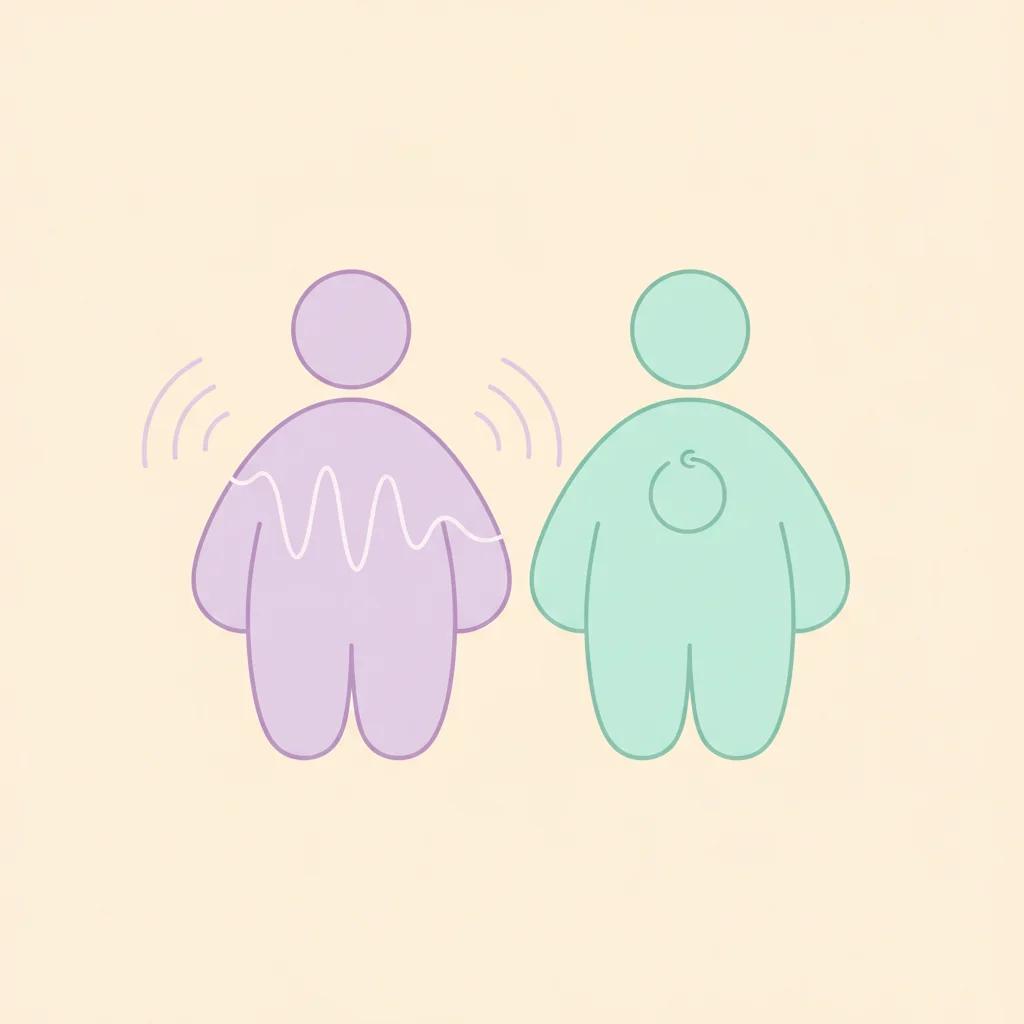
While there may be variations in how we read non-verbal social cues, when it comes to Affective Empathy, the autistic response is often highly developed. Many autistic people experience emotional contagion, a state where we literally absorb the pain of others as if it were our own. When we see a person who has been wronged or a group that is discriminated against, we can feel the frustration and hurt powerfully. Our pursuit of justice stems from the fact that the harm to others resonates within us, and it is difficult for us to bear the existence of this suffering in the world.
From Confusion to Anxiety and Paralysis
The way autistic people react when they witness injustice or pain may not always appear to others as classic empathy. Neurobiological theories describe how our autonomic nervous system may become dysregulated in the face of heavy emotional load. The feeling of injustice can put us in a state of hyperarousal accompanied by anger and anxiety, or alternatively, in a state of detachment and paralysis in order to protect ourselves from emotional overload. Others may mistakenly interpret this detachment as a lack of caring, even though a real storm is raging inside on behalf of the person who was harmed.
The Social and Psychological Cost of Pursuing Truth
The high sensitivity to injustice has immense moral value, but in a society that doesn't always appreciate directness, it exacts a considerable psychological toll on us.
Social Camouflaging and Exhaustion
Much of the time, we understand that our natural reaction to injustice will not be met with understanding by others. To maintain a job, relationships, or simply to survive the day, many autistic people are forced to Camouflage their feelings. This Camouflaging includes silence in places where every cell in our body wants to scream, and strenuous learning of how neurotypical people ignore small injustices. The constant effort not to tell the truth when someone lies, or not to confront a person who acts unfairly, leads to an experience of internal exhaustion and constant Autistic Burnout.
Constant Anxiety and Autistic Rumination
An event where we encountered injustice can remain in our system long after it has ended. The phenomenon of repetitive and uncontrollable thoughts is well known among autistic people, and it sometimes has similarities to anxiety states. The brain can get stuck on the unjust event, analyze it again and again, think about everything we should have said but didn't, or agonize over the illogical nature of the incident. This tendency means that the harm from injustice is often experienced as cumulative harm, which greatly burdens quality of life and drastically increases feelings of general anxiety.
Cumulative Trauma and Misunderstanding
Trying to live in a world that rewards double meanings and half-truths can create experiences of continuous harm. Autistic people are often told that they are exaggerating, that they are making a big deal out of nothing, or that they are too rigid. These reactions invalidate our real and legitimate experience. When our authenticity and desire for a fair environment are repeatedly criticized, it can lead to social isolation and significant psychological distress.
Living Peacefully with the Inner Need for Justice
Understanding that our developed sense of justice is an integral part of who we are is the first step to self-acceptance. There is no reason for us to feel guilty for caring, but it is important to find ways to manage our resources correctly so as not to collapse.
Early identification of Sensory Overload: When we feel that injustice is starting to physically overwhelm us, it's important to take a step back. The space we are in is not always the safe place to express our feelings.
Channeling sensitivity into meaningful action: The intense passion for justice can be directed towards social activism, advocacy, or working in professions that require extreme attention to ethics and details.
Creating an adapted environment: We need relationships where communication is clear and direct. Surrounding ourselves with people who understand our need for certainty, transparency, and honesty is not a privilege but a basic need.
Reducing self-criticism: Reminding ourselves that our reaction is completely logical. We operate from a neurological system that values truth and order, and this is a tremendous strength in a society that often loses its way.
The Social Model of Disability reminds us that the challenge often lies in the encounter between the autistic person and an environment that is not adapted to them. When we recognize the value of sensitivity to injustice, we understand that our voice is needed in the world. We do not need to learn to turn a blind eye to fit in, but to learn how to make our voice heard without exhausting our mental energies.
Frequently Asked Questions
Why are autistic people so sensitive to injustice?
Sensitivity to injustice stems from unique cognitive and emotional mechanisms, including Dichotomous Thinking (all or nothing), difficulty coping with uncertainty, and a tendency to focus on details. In addition, highly developed Affective Empathy, emotional contagion to the feelings of others, and understanding rules and laws as promoters of certainty, cause them to experience injustice as a fundamental violation.
Is the injustice that autistic people experience just a gut feeling or does it have a neurological basis?
The injustice that autistic people experience is not just a fleeting feeling, but a powerful physical and emotional experience based on neurological mechanisms. The autistic brain processes information differently, and discrepancies between expectations and reality, resulting from injustice, create prediction errors that cause stress and anxiety.
Does sensitivity to injustice indicate a lack of flexibility or rigidity in autistic people?
No. Sensitivity to injustice is not a flaw in character or an inability to be flexible, but a direct expression of a cognitive and emotional structure that values consistency, integrity, and transparency. Society tends to label this need as rigidity, but in fact, it is a different understanding of the world.
Are autistic people lacking in empathy because they react severely to injustice?
This is a harmful and false stigma. The reality is that many autistic people experience deep Affective Empathy, sometimes even emotional contagion, where they absorb the pain of others. Their pursuit of justice stems from the powerful feeling of harm to others resonating within them.