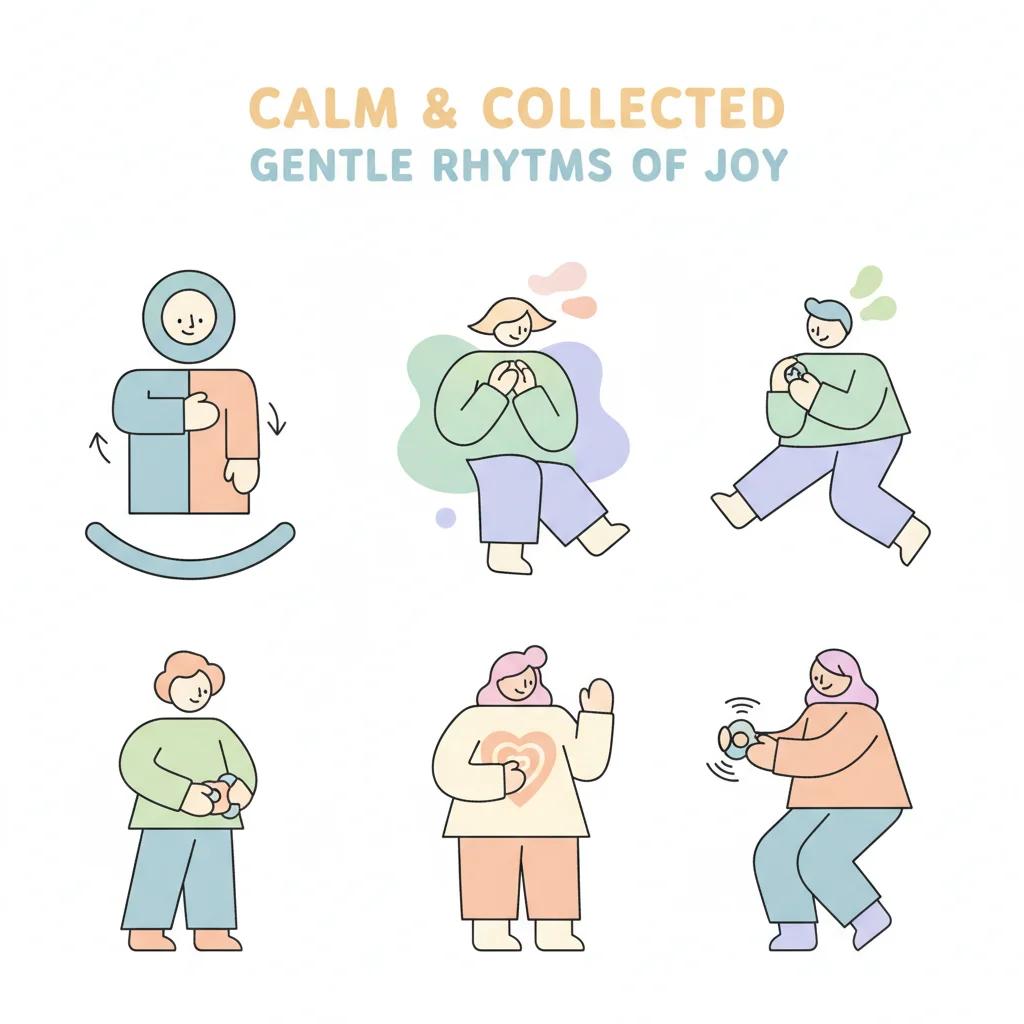
For many autistic people, repetitive movements, known as stimming (short for Self-Stimulatory Behavior), are not a strange deviation or a habit to be suppressed. In fact, they are essential self-regulation mechanisms, an integral part of their unique neurological profile and the way they experience the world. Stimming is a way for the autistic brain to create predictability, reduce uncertainty, and protect cognitive and emotional abilities. These movements can include rocking, tapping, hand flapping, playing with objects, making sounds, and a wide variety of other behaviors, which are often misunderstood or judged by the neurotypical environment. We believe that instead of trying to 'fix' or 'eliminate' stimming, it should be celebrated as a natural, functional, and healthy expression of autistic identity, and its importance for regulation and mental well-being should be recognized.
This article will delve deep into the world of stimming, present its many vital roles in the lives of autistic adults, and explain why acceptance and understanding of these movements are critical for building an inclusive and supportive society. We will examine the connection between stimming and Sensory Processing, emotional management, and the reduction of anxiety and uncertainty, while addressing the heavy cost of Masking stimming and its implications for Autistic Burnout. We will also discuss the importance of creating accepting environments that allow autistic people to express themselves freely, thereby reducing the daily burden of navigating a world not always adapted to their unique brain structure. Ultimately, our goal is to promote an open and non-judgmental dialogue that recognizes the legitimacy of stimming and contributes to the physical and mental health of autistic people.
What is Stimming and its Central Role?
Stimming, or self-regulation movements, refers to a wide range of repetitive behaviors, voluntary or involuntary, performed by autistic people. These movements are not random or meaningless; they serve critical functions for the autistic brain, which strives to maintain internal balance in an often unpredictable and overwhelming external environment. These movements are designed to help regulate arousal levels, manage Sensory Overload, reduce stress and anxiety, and increase focus and attention. Autistic people often experience the world through a different sensory lens, and stimming is a key adaptive tool for coping with these unique challenges. It is a natural strategy activated by the nervous system to ensure a sense of security and optimal functioning. Instead of viewing stimming as a behavior to be discouraged, we must understand it as an expression of deep internal needs and a clever mechanism of the body for self-regulation.
This understanding shifts our perspective from aversion or concern to acceptance and support. When an autistic person engages in stimming, they are actually encoding important information about their internal state and how they are responding to the environment. Stimming can be a response to Sensory Overload, internal pressure, uncertainty, or even intense feelings of joy and excitement. The ability to discern these nuances and respect the need for stimming not only allows for better support but also empowers the autistic person to feel a sense of belonging and security in their environment. It is not a 'defect' in personality, but the autistic brain's way of maintaining functional capacity and navigating a complex world, and therefore it should be fully allowed without pressure to suppress it.
Sensory Processing: A Bridge to the Inner World
One of the primary roles of stimming lies in Sensory Processing. Autistic people often experience sensory sensitivities different from those of neurotypical people, which can manifest as Hyper Sensitivity or Hyposensitivity to various stimuli. Loud noises, bright lights, gentle touch, or certain smells can be overwhelming and exhausting for an autistic person, or alternatively, they may seek certain stimuli to feel present and focused. In a state of Sensory Overload, when the brain is flooded with information, stimming serves as an anchor, helping to filter out unwanted stimuli, restore a sense of control, and bring about nervous system regulation. These repetitive movements provide consistent and predictable sensory input, allowing the brain to process the environment more effectively and prevent emotional collapse or burnout. For example, rocking back and forth can provide calming Proprioception input, while playing with an object of a certain texture can help with focus and reduce distractions, helping the person cope with their sensitivities.
Stimming can also help in situations of Hyposensitivity, where the brain needs additional stimulation to stay alert and engaged. In these cases, stimming movements provide the missing sensory input, allowing the person to focus on a task or environment, and improve cognitive functioning. The understanding that stimming is actually a survival strategy and an effective way to regulate the sensory system changes our relationship with it from concern to appreciation. Instead of demanding that autistic people suppress these movements, we should create environments that allow them to stim freely, thereby supporting their sensory well-being. Providing space and acceptance for different stimming expressions directly contributes to stress reduction and improved quality of life for autistic people, allowing them to experience the world with less distress and more balance. This acceptance is especially critical given that many of them have been required to hide their needs for many years, leading to chronic stress and significant difficulties.
Managing Emotions and Reducing Uncertainty
Beyond Sensory Processing, stimming plays a crucial role in managing emotions and reducing uncertainty, which are major contributors to anxiety and stress in autistic people. The neurotypical world is full of unpredictability, rapid changes, and complex social codes that are not always understood, all of which can lead to a constant feeling of insecurity. The autistic brain strives to reduce uncertainty to feel safe and functional, and stimming serves as an effective strategy to achieve this goal. Repetitive and predictable movements create a sense of internal order and predictability, thereby alleviating the mental and emotional burden resulting from navigating an unpredictable environment. They serve as a kind of emotional anchor, allowing the person to cope with pressure, frustration, anger, or even excessive excitement, while maintaining internal stability. For example, repeating an internal mantra or rhythmic tapping on the leg can calm a turbulent nervous system, similar to how meticulous planning and rehearsing phone call scripts serve as a strategy for coping with social uncertainty, as noted by Orion Kelly, who is himself an autistic person.
When an autistic person feels overwhelmed or anxious, stimming allows them to release excess energy and return to a state of calm. It is a safe and non-judgmental way to process intense emotions and prevent excessive accumulation of stress that can lead to burnout or Meltdown. It is important to understand that stimming is not an expression of drama or hyperventilation, but a safety strategy of the brain. In some cases, stimming can also serve as an expression of joy and enthusiasm when positive emotions flood the system. Instead of viewing it as a weakness or a 'disorder,' we should recognize the power of stimming as a natural human mechanism for regulation. Legitimizing and supporting stimming provides autistic people with the tools to cope with life's challenges, maintain their mental health, and thrive in a complex environment. In doing so, we convey a message of acceptance and understanding, allowing them to live more authentic lives, without the heavy burden of hiding an essential part of themselves.
The Social Model and Stimming: From Judgmental View to Acceptance
The Social Model of Disability views Autism as part of a natural spectrum of human expressions, emphasizing that the difficulties experienced by autistic people stem primarily from environmental and social barriers, rather than from an internal 'defect.' In the context of stimming, the social model challenges the prevailing notion that stimming is a behavior to be suppressed or treated. In neurotypical society, stimming movements are often perceived as 'weird,' 'impolite,' or 'unacceptable,' leading to immense social pressure on autistic people to hide or suppress them, a process known as Masking. This pressure to conform to neurotypical norms ignores the vital role of stimming in self-regulation, and instead aims to 'correct' behavior that does not align with social expectations. This perception, stemming from an outdated medical model, is not only incorrect but also deeply harmful, as it ignores the experiences of autistic people themselves and their internal needs. Instead of judging, we must listen and understand the functional and survival essence of stimming, and allow full legitimacy for this behavior.
The shift from a judgmental view to complete acceptance of stimming requires a paradigm shift in society as a whole. We must recognize that these movements are not just a sign of discomfort, but often also an expression of joy, excitement, or deep focus, and therefore should not be limited to situations of distress only. The social model encourages the creation of inclusive environments where autistic people can stim freely, without fear of criticism or rejection. This includes understanding from employers, teachers, friends, and family members that stimming is a necessary tool for maintaining mental well-being and optimal functioning. As Orion Kelly notes, 'Autistic quirks are not personality flaws. They are attempts by the brain to create predictability, reduce uncertainty, and protect abilities.' This acceptance of stimming is not just a matter of tolerance, but of recognizing the right of autistic people to express themselves authentically, and to live full and meaningful lives according to their unique neurological profile. Moreover, legitimizing stimming can prevent severe negative consequences for the mental health of autistic people.
The Cost of Hiding: Burnout and Dysregulation
The constant pressure to suppress stimming, often referred to as 'Masking' or 'Camouflaging,' takes a heavy mental and physical toll on autistic people. When an autistic person is forced to hide their self-regulation movements to conform to social norms, they invest an enormous amount of mental and emotional energy. This effort of hiding and self-control, carried out over time, leads to constant overload on the nervous system, and ultimately manifests in states of Autistic Burnout. Autistic Burnout is a state of deep physical, mental, and emotional exhaustion that can significantly affect daily functioning and even lead to the loss of acquired skills. It is not just fatigue, but a state of collapse due to excessive demands and continuous stress from navigating a world not adapted to the needs of the autistic person. Many people describe it as a feeling of emptiness, inability to perform basic tasks, and extreme difficulty in emotional regulation. This hiding can lead to feelings of loneliness, guilt, and frustration, and even increase the risk of anxiety and depression, as the person lives disconnected from an essential part of themselves.
Masking not only prevents autistic people from regulating themselves effectively but also creates an internal experience of self-alienation. Self-perception is damaged when one is forced to pretend to be someone they are not, leading to feelings of 'Impostor Syndrome' or 'not belonging.' As Orion Kelly explains, it is not laziness, but 'survival for autistic adults.' Hiding stimming reduces functional capacity, increases sensitivity to sensory stimuli, and makes it difficult to process emotions. The result is a negative vicious cycle: the more a person tries to hide stimming, the more they enter a state of burnout, which increases the need for stimming and makes its suppression even more difficult. Recognizing this cost is essential to creating supportive environments where Masking is not required. We must understand that acceptance of stimming is not just a convenience, but a necessity for the health and well-being of autistic people, and it allows them to maintain higher energy levels and better functioning in daily life, without continuous mental collapse.
The Need for Recovery Time and Safe Space
Following the daily burden of navigating a neurotypical world and the effort to suppress stimming, autistic people critically need recovery time and safe spaces that allow them to re-regulate themselves. Time alone, in a quiet and stimulus-free place, is essential for them to recover from Sensory Overload, exhausting social interactions, and constant mental effort. Orion Kelly emphasizes that 'alone time is absolutely critical for your autistic partner to regulate and recover from the daily challenges of social interactions, sensory overload, and the endless brick walls the neurotypical world puts up.' During this time, stimming often occurs naturally and uninhibited, serving as a key tool for restoring internal balance. Safe spaces are places where an autistic person can be completely authentic, stim as much as needed, and without fear of judgment or criticism. This can be a quiet room at home, a special corner at work, or any other place that provides a sense of security and comfort, without the need to wear a mask. The lack of sufficient recovery time or safe spaces can exacerbate Autistic Burnout and significantly harm mental health.
Allocating time and space for recovery is not a luxury, but a basic need that allows autistic people to function effectively in their lives. Our ability, as a society, to understand and respect this need is essential for creating an inclusive environment. For autistic partners, for example, alone time is not a sign of rejection, but an act of self-love and regulation that allows them to return to social interaction with renewed capacity. Demanding that they give up this time is like demanding that they give up oxygen, and can lead to severe damage to relationships and functioning. By legitimizing recovery time and safe spaces, we not only support the autistic individual but also contribute to building healthier relationships and stronger communities. This understanding is a necessary step to ensure a better quality of life for autistic people, and to fully recognize their unique needs as a natural and accepted part of society.
Acceptance, Support, and a Nurturing Environment
Creating an inclusive and supportive environment for autistic people requires more than just tolerance; it demands active acceptance and a deep understanding of their unique needs, especially stimming. This acceptance begins with the recognition that stimming is not a behavior to be condemned or discouraged, but an essential self-regulation mechanism that serves countless purposes. To achieve this, we, as a society, must change our approach to stimming movements: instead of asking 'why is he doing that?', we should ask 'what need does this stimming serve for him?'. This question prompts us to understand the connection between stimming and the person's internal state, whether it is Sensory Overload, anxiety, joy, or a need for focus. Creating a nurturing environment means giving the autistic person the freedom to stim in public and private spaces, without fear of judgment, stares, or requests to suppress the movement. This includes educating the general public about the role of stimming, thereby reducing stigmas and prejudices. This acceptance allows autistic people to feel secure, belonging, and authentic, thereby significantly improving their mental well-being and their ability to function in society.
Supporting autistic people also requires active involvement in creating Reasonable Accommodations, such as providing access to quiet places when needed, minimizing unnecessary sensory stimuli, and allowing them to wear comfortable clothes or use adapted stimming aids. It is also important to learn the unique language of each autistic person, and to pay attention to changes in their stimming, which can indicate an increase in stress levels or overload. This way, we can offer real-time support and avoid severe Autistic Burnout situations. A nurturing environment is one that does not place unreasonable demands for conformity, but respects the diversity of neurological expressions. It views autistic people as equals, legitimate partners in the community, and cherishes their unique contributions. In doing so, we create not only a more inclusive society but a richer and more diverse society that benefits from the different perspectives and experiences of all its members. This is not just a service for a specific group, but an essential foundation for building a more just and empathetic world for everyone.
Understanding the Communication Behind the Movement
Stimming, beyond being a tool for self-regulation, often also serves as a non-verbal form of communication, allowing autistic people to express internal states or respond to the environment when verbal communication is unavailable or ineffective. Changes in the frequency, intensity, or type of stimming can indicate increasing distress, great excitement, Sensory Overload, or a need for focus. For example, accelerated stimming accompanied by other signs of stress may signal that the person is on the verge of Autistic Burnout or Meltdown, and that they need an immediate break or an environmental change. Conversely, soft and gentle stimming can indicate tranquility, deep concentration, or simply comfort in the given situation. Understanding this language requires attention, empathy, and non-judgmental observation, instead of a quick interpretation of behavior as 'strange' or 'purposeless.'
Partners, friends, and family members of autistic people can learn to identify the unique stimming patterns of their loved ones and understand the messages they are conveying. This ability allows for appropriate and timely support, such as creating a quiet environment, reducing demands, or simply offering a calming presence. Recognizing stimming as legitimate communication empowers the autistic person by allowing them to feel that their voice is heard and understood, even when they cannot express it in words. This is a fundamental step in building relationships based on trust and mutual respect, and it promotes a sense of security and social belonging. By looking inward and recognizing the richness of human expressions, we can learn a lot about how autistic people experience the world, and build bridges of understanding instead of walls of misunderstanding and alienation. Understanding the hidden language of stimming is key to building a more empathetic and inclusive society.
Stimming as Part of Neurological Identity
Beyond its role as a regulation or communication tool, stimming is an integral part of the neurological identity of autistic people. It reflects how their brain processes information, responds to stimuli, and copes with daily challenges. Demanding the suppression of stimming not only harms the ability for self-regulation but actually requires autistic people to deny an essential part of their very being. This approach, which focuses on 'normalization,' deeply harms self-image and mental health. Instead, stimming should be celebrated as a unique and diverse expression of the autistic brain, just as we celebrate any other expression of Neurodiversity. When an autistic person receives legitimacy for their stimming, they receive legitimacy for who they are, without needing to hide or be ashamed. This contributes to building a positive self-image, reducing feelings of 'difference' or 'defect,' and living more authentic lives. Recognizing stimming as an integral part of autistic identity is an important step in promoting the Neurodiversity movement and accepting the diversity of human expressions. It is not a 'disorder' to be cured, but a natural characteristic of a unique neurological profile. Instead of pushing stimming to the margins, we must bring it to the center of the discourse, and recognize it as a powerful tool that allows autistic people to thrive in the world.
Why is it Important to Celebrate Stimming?
Celebrating stimming is not just a matter of acceptance or tolerance, but a recognition of its value and strengths. When we celebrate stimming, we are actually celebrating Neurodiversity and the unique ways in which different brains function and express themselves. Stimming can be an expression of creativity, deep concentration, pure joy, or an amazing ability for self-regulation. It indicates internal flexibility and clever adaptive strategies developed to cope with unique challenges. For many, stimming is also a source of comfort and tranquility, allowing them to feel safe and focused in an environment that can be overwhelming. When we allow and encourage stimming, we empower autistic people to live fuller and more authentic lives, without the heavy burden of pretense and hiding. This is a necessary step to reduce rates of anxiety, depression, and Autistic Burnout among the autistic population. Moreover, stimming allows autistic people to conserve their mental energy for other meaningful tasks, instead of wasting it on constant self-suppression.
A society that respects and celebrates stimming is a society that understands the importance of Neurodiversity and values the unique contributions of each individual. It sees these movements not as a sign of 'abnormality,' but as evidence of a fascinating human ability to regulate oneself and thrive. This celebration creates a safe space for autistic people to bring their full selves to every interaction, without needing to apologize for who they are. This is not just a service to a minority group, but an investment in building an empathetic, inclusive, and enriched world by the diversity of human perspectives and experiences. By celebrating stimming, we are essentially reinforcing the message that Autism is not a disability but a different, legitimate, and valid way of experiencing the world. The goal is to reach a point where stimming is universally accepted, without incurring any judgment or criticism, thereby allowing autistic people to thrive to their full potential, without unnecessary losses of precious energy. Stimming is actually living proof of the wisdom of the body and mind, seeking to protect and support the person in every situation.
Summary
In conclusion, stimming is much more than just a 'nervous habit' or 'quirk'; it is an essential and integral self-regulation mechanism in the lives of autistic adults. These movements help manage Sensory Overload, regulate emotions, reduce uncertainty, and increase focus, thereby protecting functional capacity and helping prevent Autistic Burnout. The social pressure to suppress stimming, or 'Mask,' takes a heavy toll of mental and emotional exhaustion, and deeply harms the mental well-being of autistic people. Therefore, recognition, acceptance, and celebration of stimming are critical for creating a truly inclusive and empathetic society. We must understand that stimming is not a 'disorder' to be cured, but a natural characteristic of a unique neurological profile and a legitimate, and even necessary, way to express the autistic self. Creating nurturing environments where stimming is allowed and supported, along with providing space and time for recovery, will allow autistic people to live fuller, healthier, and more authentic lives. When we adopt this approach, we will build a world where every person, regardless of their neurological profile, can feel a sense of belonging, safety, and appreciation. This is an invitation to all of us to learn, understand, and respect the diversity of human expressions, and thereby enrich society as a whole.