Shattering the myth of "a little autistic" or a straight line.
One of the most familiar and frustrating experiences for autistic adults is the moment we share our identity with another person, only to receive responses like "But you don't look autistic," "We're all a little autistic," or the classic question: "Are you high-functioning or low-functioning?" These responses, even if well-intentioned or due to lack of familiarity, reveal a deep and mistaken societal perception of what it means to be autistic. Society has become accustomed to thinking about Autism through a medical and linear model, but our daily and neurological reality is completely different.
To truly understand the autistic experience, we must discard the image of a straight ruler on which people are arranged, and begin to think of a multi-dimensional, rich, and complex spectrum.
The straight-line trap and the danger of labels
The most common myth is that the Autistic Spectrum is a straight line. On one side of the line are "normal" or "a little autistic" people, and on the other side are "very autistic" people. This approach gave rise to the familiar functioning labels, which the autistic community deeply rejects.
The central problem with dividing people into functioning categories stems from the fact that these terms do not describe the internal experience of the autistic person, but rather the extent to which they are comfortable or disruptive to the neurotypical environment. A label of High-Functioning Autism often denies the internal struggles, exhaustion, and daily difficulties that the person experiences. It causes the environment to withhold necessary support and accommodations, assuming that if the person can speak or work, then everything is fine with them. Conversely, a label of low-functioning completely erases the potential, talents, and rich inner world of the person, and ignores the fact that even non-speaking people communicate in other ways and have much to say.
Instead of assigning functioning scores, it is more correct and accurate to talk about varying support needs. An autistic person may require significant support in one area, and be completely independent or even demonstrate exceptional skills in another. Moreover, our support needs are not static. They change from day to day, hour to hour, and are affected by the level of stress, Sensory Overload, and the environment we are in.
The shift to the color wheel
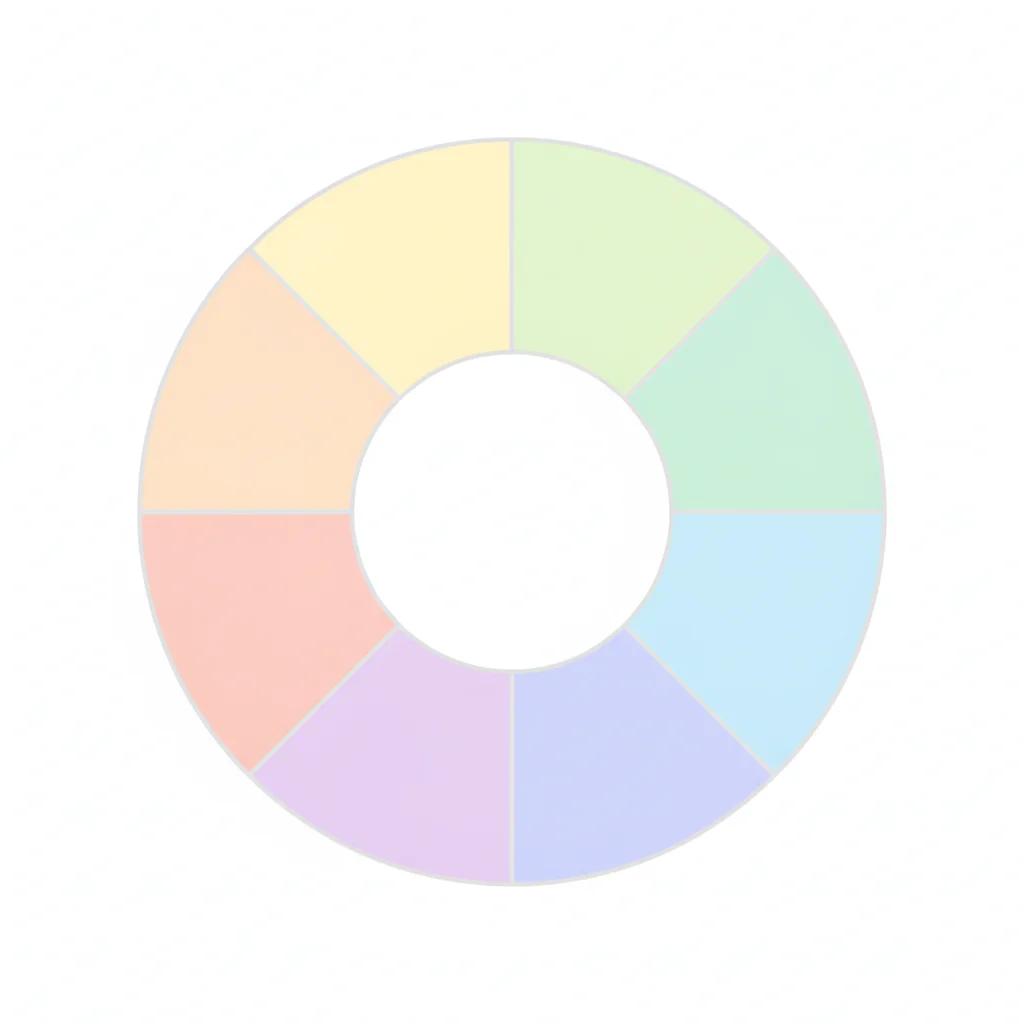
If the spectrum is not a straight line, what is it? A much more useful way to illustrate this complexity is through the metaphor of a color wheel or a multi-channel recording studio control panel.
In the color wheel model, each "color" or channel represents a specific neurological trait or ability. In each autistic person, these channels are tuned to different intensities, creating a completely unique profile. This profile can include sharp ups and downs, sometimes referred to as a Spiky Skills Profile. This creates a situation where two autistic people may be different from each other in almost every external aspect, yet both share the same basic neurological variation.
Here are some of the key dimensions that make up our wheel:
Sensory Processing and the experience of the physical world
The autistic nervous system perceives and processes information from the environment differently. Some of us experience severe Hyper Sensitivity to sounds, lights, or textures. The sound of a hand dryer in a public restroom or the hum of a fluorescent light in an office may be experienced as actual physical pain. Conversely, there are autistic people who experience Hyposensitivity, and will seek deep touch, intense movement, or strong visual stimuli to regulate themselves. Often, the same person will experience Hyper Sensitivity in one sense and Hyposensitivity in another.
Communication and social interaction
Autistic social language is different from neurotypical language. This is not a lack of desire to communicate or an absence of Affective Empathy, but rather the operation of a different operating system. We often interpret communication literally and directly, struggle with subtext, and prefer deep conversations and information exchange over light small talk. The social difficulty we experience often stems from a phenomenon known as the Double Empathy Problem. The autistic person struggles to understand the neurotypical person to the exact same extent that the neurotypical person struggles to understand the autistic person. This is a clash of cultures, not a flaw in one side's abilities.
Learning style and information processing
Our neuropsychological structure is often characterized by a data processing style focused on small details. We may perceive every single detail in the environment, which allows us to identify patterns, analytical thinking, and unique problem-solving abilities. However, perceiving this abundance of information can make it difficult to see the full picture at first, and lead to cognitive overload. Our tendency to delve into Special Interests and establish structured routines is not just a preference. These are essential mechanisms that help us create order, predictability, and emotional regulation within a world that often feels chaotic and incomprehensible.
The transparent cost of Masking
The main reason society continues to hold onto the straight-line myth and the concept of "a little autistic" lies in the phenomenon of Masking or Camouflaging. Many autistic people, especially those diagnosed later in life, have learned throughout their lives to anticipate and imitate expected social behavior. We force ourselves to maintain eye contact even when it's uncomfortable, suppress Stimming, and memorize social scripts to fit in.
This Masking works. Outwardly, we may appear just like everyone else, leading to the same disbelief when we share our identity. But the price we pay for neglecting our needs and for the constant performance is unbearable. The energetic depletion, the anxiety of exposure, and the loss of our original sense of self often lead to emotional detachment, depression, and complete exhaustion. When someone tells us we look normal, they are actually complimenting us on our ability to hide who we are at the cost of our mental health.
Fluctuation and the presence of comorbidities
An integral part of the richness of the autistic color wheel is the recognition that abilities and traits are not constant over time. One morning, in a quiet and familiar environment, an autistic person can lecture to an audience, manage a complex project, or create magnificent art. That same evening, after being exposed to flickering lights, sudden noise, or confusing social interaction, that exact same person may lose the ability to speak, struggle to prepare a simple meal for themselves, or experience a Sensory Meltdown.
Furthermore, most of us do not experience Autism in a vacuum. Many of us cope with Medical Comorbidities, with anxiety being the most common phenomenon. Huge percentages of the autistic community are also diagnosed with generalized anxiety, social anxiety, or other ongoing conditions. This anxiety is not necessarily disconnected from our Autism, but rather often constitutes a logical response of a sensitive nervous system trying to navigate a world not adapted for it and to meet rigid social expectations. When anxiety increases, our autistic needs also grow, and our place on the color wheel shifts and changes.
Celebrating diversity, demanding accommodation
The understanding that the spectrum is not a straight line of deficits, but a multi-dimensional space of human diversity, is the cornerstone of the Social Model of Disability. According to this view, the most significant difficulties we experience do not stem from being autistic, but from the painful gap between our natural needs and a society and environment that refuse to make the necessary Reasonable Accommodations.
This is precisely why the autistic community worldwide has abandoned the puzzle piece symbol, which implied that there was a missing part in us that needed to be fixed or solved, and instead adopted the infinity symbol. The infinity symbol represents the endless diversity of the human mind and the full color spectrum of our experience. No one is "a little autistic." We are autistic, with all our layers, complexities, vulnerabilities, and unique strengths. The more society learns to recognize our color wheel as it is, without trying to squeeze us into the linear functioning scale, the more we can live authentic, accessible, and empowering lives.
Questions and Answers
What is the main problem with the perception of "Autistic Spectrum as a straight line"?
The perception of the Autistic Spectrum as a straight line, where on one side are "normal" or "a little autistic" people and on the other side are "very autistic" people, leads to functioning labels like "High-Functioning Autism" or "low-functioning." These labels do not describe the internal experience of the autistic person, but rather their degree of conformity to the neurotypical environment, and may prevent them from receiving necessary support and accommodations.
How can the complexity of the autistic experience be better understood instead of using functioning terms?
Instead of categorizing people by functioning, it is more correct and accurate to talk about varying support needs. An autistic person may require significant support in one area and be completely independent in another. Support needs are not static and change according to factors such as stress level, Sensory Overload, and environment.
What metaphor is more effective for illustrating the Autistic Spectrum than a straight line?
A more useful way to illustrate the complexity of the Autistic Spectrum is through the metaphor of a color wheel or a multi-channel recording studio control panel. Each "color" or channel represents a neurological trait or ability, where in each autistic person these channels are tuned to different intensities, creating a unique profile.
What are some of the key dimensions that make up the "color wheel" of the autistic experience?
Key dimensions include Sensory Processing and the experience of the physical world (Hyper Sensitivity or Hyposensitivity to sensory stimuli), communication and social interaction (different social language, difficulty understanding subtext), and learning style and information processing (focus on details, tendency towards Special Interests, and coping mechanisms).