For decades, public and medical discourse has viewed Autism through a pathological lens, as a kind of malfunction to be fixed or a problem to be solved. But scientific reality and the personal experience of autistic adults point to a completely different picture. The simple and clear answer is that Autism is not a disease, so don't look for a cure. It is a natural neurological variation, part of human diversity, that does not require healing but rather understanding, acceptance, and environmental accommodations.
The daily challenges autistic people face do not stem from an internal "defect," but from a profound mismatch between their unique characteristics and the demands of a world built by and for neurotypical people. This understanding, now supported by current classification systems, completely changes how we should think about support, treatment, and community belonging.
The Shift from the Medical Model to the Biopsychosocial Model
The classical approach to Autism was based on the medical model, which sought the source of the "disability" within the individual and aimed to normalize their behavior. Today, there is growing consensus among professionals and the autistic community itself to adopt a more integrated approach, recognizing that many difficulties arise from a poor fit between the individual and their environment. This approach examines how social, environmental, and psychological factors affect our quality of life.
When an environment requires an autistic person to function against their nature, for example, to sit in a noisy workspace overwhelmed with stimuli, or to manage complex social interactions according to codes that are not intuitive for them, distress arises. This distress is not a symptom of Autism itself, but a result of a sensory and socially hostile environment. Autistic people have diverse cognitive abilities, and many can thrive in environments that allow for sensory regulation, direct communication, and personal space. The solution is not surgery or a pill that will change brain structure, but creating environmental accommodations that will enable a real quality of life.
The Hidden Challenges of Adulthood
Many tend to think of Autism as a childhood issue, but Autism is a lifelong neurological condition. Often, the signs become clearer in adolescence or adulthood, when social, academic, and occupational demands exceed the ability to compensate for them. The current psychiatric system recognizes that many autistic people receive a diagnosis only in adulthood, sometimes following a crisis, breakdown, or the appearance of secondary distresses such as anxiety and depression. These distresses are not necessarily an inherent part of Autism, but a reaction to the immense effort required to survive in an unaccommodating world.
The Heavy Price of Social Camouflaging
One of the main reasons why one should not try to "cure" or eradicate autistic behaviors is the phenomenon of Camouflaging. In an attempt to fit in and avoid stigma or rejection, many autistic adults learn to mask their natural traits. They suppress physical Stimming, learn to imitate appropriate eye contact, and force themselves to participate in small talk that drains them of energy.
Emotional Harm and Disconnection from Self
Recent studies show that Camouflaging is one of the main causes of psychological burnout among autistic people. Autistic women, in particular, tend to mask their Autism at significantly higher rates compared to men. This often leads to late or incorrect diagnosis, but more severely, to deep harm to mental well-being.
When a person is forced to behave completely contrary to their neurological nature to be perceived as "normal," they pay an enormous energetic and emotional price. It has been found that persistent attempts to mask are closely linked to a decrease in the ability to express positive emotions and a significant increase in levels of anxiety and depression. The social demand to appear normal is essentially a demand for forced healing, and it produces traumatic damage that sometimes takes years to recover from.
Support Focused on Quality of Life Instead of "Fixing"
A true understanding of Neurodiversity requires a paradigm shift in relation to treatments and support. If in the past the goal was to make the autistic person as similar as possible to a neurotypical person, today the emphasis must be on providing tools for independent, fulfilling, and safe lives, while preserving autistic identity.
Technological and Environmental Accommodations
We are now seeing the development of therapeutic and environmental tools that focus on the needs of the individual themselves. The use of technologies, digital platforms, and even tools for monitoring sensory regulation, allows autistic people to manage their resources better. Such systems do not try to teach the person how to stop stimming or repeating words, behaviors that often serve a vital need for emotional and sensory regulation. Instead, they offer ways to manage anxiety, communicate in a safe environment, and find spaces where one can function without overload.
Beyond technology, there is paramount importance in making services, workplaces, and healthcare systems accessible. Creating sensory-sensitive work environments that allow for flexibility in working hours and reduce the need for unnecessary informal interactions is an excellent example of an appropriate solution that does not require changing the person.
Understanding the Mechanisms Behind Behavior
To truly provide helpful support, it is important to recognize the unique cognitive structure of autistic people. Unlike neurotypical people, who often process information holistically and generally, autistic people tend to process information in a detailed and deep manner. This has enormous advantages, especially in areas requiring high concentration, system analysis, and attention to detail, but it can also create cognitive overload when faced with a sudden multitude of stimuli.
Dichotomous Thinking or difficulty with sharp transitions between tasks are not symptoms of a disease, but a result of how the brain tries to create order and predictability in a chaotic world. When the environment understands this, it can offer practical solutions such as providing advance warnings about schedule changes or structuring tasks in a clear and unambiguous way.
Education, Rights, and Community Belonging
Treating Autism as a condition that requires understanding and accommodations is also correct at the policy level. It is important that educational and legal systems do not treat support for autistic people as merely a medical solution, but as a fundamental civil right that enables accessibility. Protecting educational and social rights allows autistic people to live within the broader community with the support they need, rather than as an excluded group requiring separate medical treatment.
Rights-based support views the autistic person as an equal citizen, whose support needs vary from person to person and throughout different periods of life. The perception should be one of full inclusion that respects uniqueness, rather than forced integration into a narrow behavioral pattern.
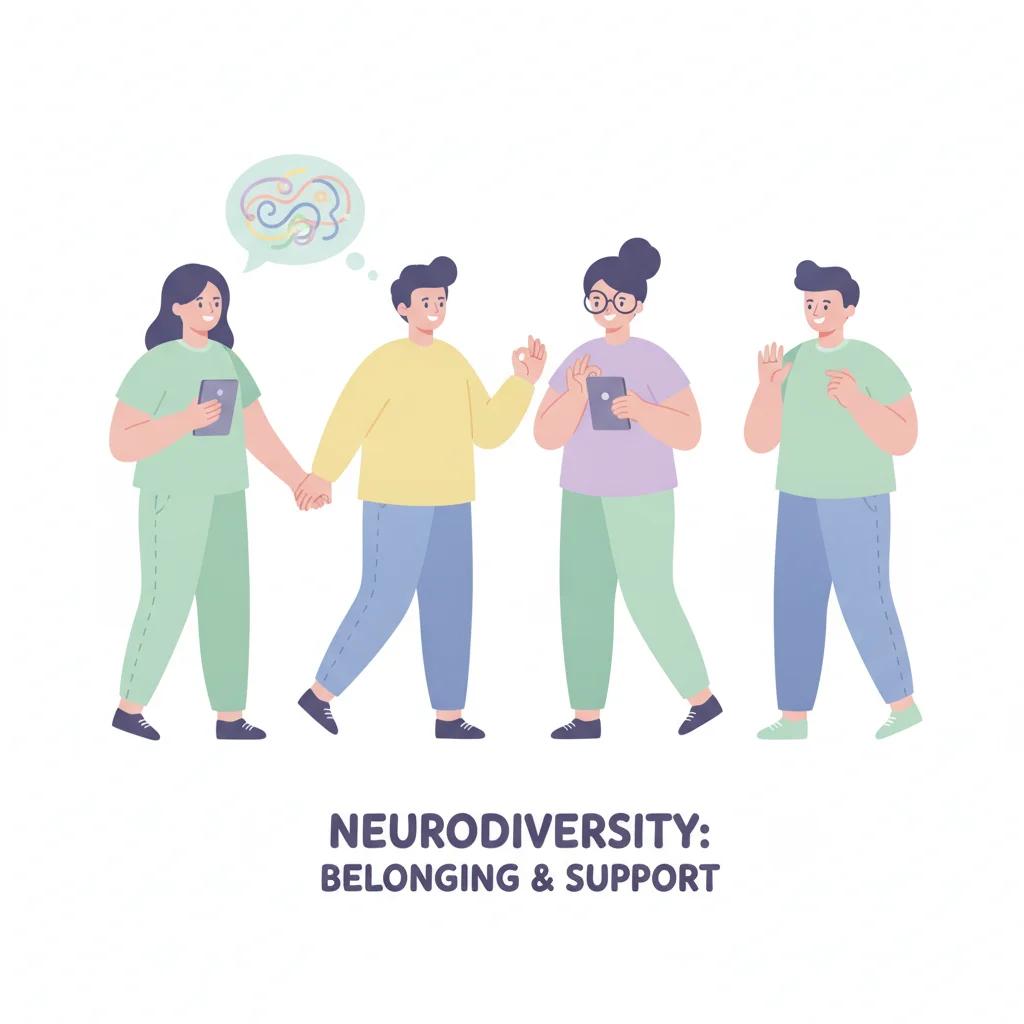
Ultimately, the most significant voice should be that of the autistic community itself. Creating support networks where autistic people can share experiences, knowledge, and understanding without constantly having to explain themselves, is often the source of true strength and healing. Healing not of Autism, but of the feeling of loneliness, alienation, and social trauma. True acceptance begins when we stop looking for cures for who we are, and begin to demand the place we deserve in the world, exactly as we are.
Frequently Asked Questions
Is Autism considered a disease that requires a cure?
No, Autism is not a disease, but a natural neurological variation that is part of human diversity. It does not require a cure, but rather understanding, acceptance, and environmental accommodations.
What causes the difficulties that autistic people experience daily?
The difficulties do not stem from an internal "defect," but from a mismatch between the unique characteristics of the autistic person and the demands of the world, which was built by neurotypical people.
Why is it important to avoid trying to "cure" or eradicate autistic behaviors?
Because this attempt leads to the phenomenon of Camouflaging, where autistic people learn to suppress their natural traits to fit in. This Camouflaging causes psychological burnout, impaired ability to express positive emotions, and an increase in anxiety and depression levels.
What is the recommended approach for supporting autistic people today?
The recommended approach is to shift from the medical model to the biopsychosocial model. The goal is not to make the autistic person as similar as possible to a neurotypical person, but to provide tools for independent, fulfilling, and safe lives, while preserving autistic identity, through technological and environmental accommodations.