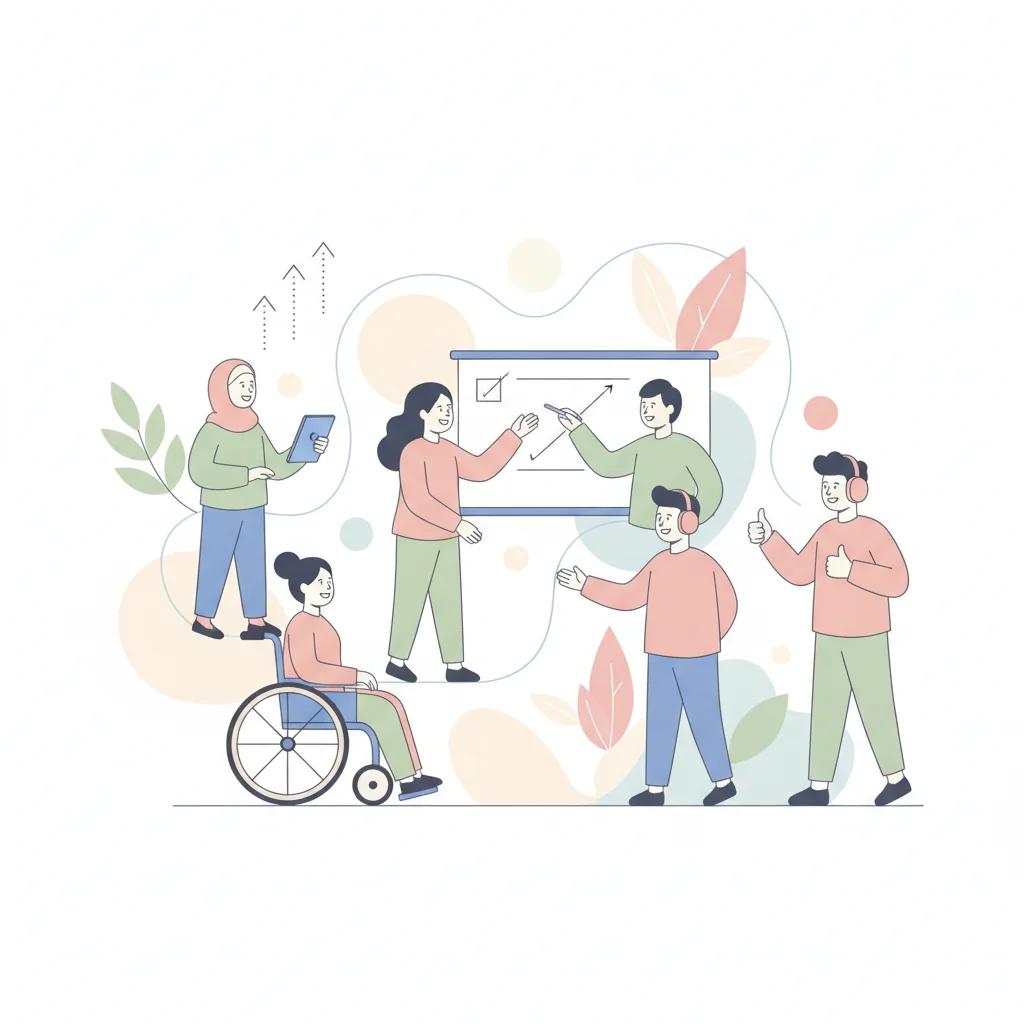
Understanding neurological diversity, particularly autistic neurological profiles, is crucial for creating a work environment where every employee can thrive. Instead of viewing Autism as a condition to be 'fixed,' we recognize it as a natural part of the human brain's diversity. Hence the importance of workplace accommodations-not as a privilege or special treatment, but as a necessary means to promote equal opportunities and enable autistic people to contribute their unique skills fully. Workplace accommodations for autistic people are designed to bridge gaps that may arise due to differences in information processing, communication, and social interaction, thereby creating an accessible and inclusive environment for everyone.
Many autistic people demonstrate a wide range of unique strengths in the workplace. Their ability to focus on small details, identify complex patterns, and dedicate deep attention to specific tasks can be an invaluable asset to teams and organizations. However, alongside these strengths, there are sometimes neurological characteristics that can pose challenges in standard work environments not adapted to this diversity. Recognizing strengths and understanding challenges is the first step to creating a workspace where everyone can feel safe, productive, and capable of realizing their full potential. Through open dialogue and appropriate accommodations, bridges can be built for mutual understanding and shared success.
Understanding the Unique Neurological Profile in the Workplace
The autistic neurological profile is characterized by different ways of processing information and interacting with the world, which can manifest in various ways in the workplace. Many autistic people excel at tasks requiring attention to detail, logical thinking, and pattern recognition. They may show exceptional dedication and reliability in their work, maintaining high standards of accuracy. These traits make them excellent candidates for roles requiring deep concentration, data analysis, or complex problem-solving. A preference for direct and honest communication, without social games or hints, can also be an advantage in a work environment that values transparency.
On the other hand, these same characteristics can lead to challenges in unadapted work environments. Differences in Sensory Processing, for example, can cause certain noises, bright lights, or strong smells to become extreme distractions or even painful. Complex social interactions, unstated social expectations, or the need for small talk can be exhausting and lead to significant cognitive overload. Many autistic people describe the effort to fit in and mimic 'normative' behaviors-a process known as 'Masking'-as a process that exacts a heavy energetic and psychological toll, leading to Autistic Burnout. Autistic Burnout can manifest as chronic fatigue, decreased functioning, and increased sensitivity to stimuli, which emphasizes the need for accommodations that reduce this burden.
This understanding is critical for creating a fair and successful work environment. Instead of focusing on 'deficiencies' or 'impairments,' we aim to understand the mechanisms behind the challenges and offer practical solutions. Such an approach allows employers to benefit from unique talents and diverse perspectives, while enabling autistic employees to feel valued, safe, and productive. This is an opportunity to transform the workplace into a space where everyone can express their best abilities, without needing to hide who they truly are.
Workplace Accommodations: Principles and Approaches
Workplace accommodations for autistic people are based on the recognition that there is no single, uniform autistic profile; if you've met one autistic person, you've met one autistic person. Therefore, each accommodation must be personal and tailored to the employee's specific needs, taking into account their unique characteristics and job requirements. The best approach is an open and honest dialogue between the employee and employer, where the employee feels safe to disclose their needs, and the employer shows flexibility and willingness to learn and assist. The goal is to find creative solutions that enable the employee to function optimally, while minimizing stress factors and overload.
One of the guiding principles is focusing on strengths. Instead of trying to 'fix' or 'overcome' challenges, one can think about how to leverage the unique talents of the autistic employee. For example, if an employee excels at deep concentration on specific tasks, they can be provided with a quiet, distraction-free environment that allows them to realize this ability. Emphasis on early problem-solving is crucial. Instead of letting small problems accumulate and turn into major crises, it is important to address them quickly and efficiently, which can prevent burnout and misunderstandings.
Self-empowerment and self-awareness development are critical factors in this process. The more an autistic person is aware of their needs, strengths, and challenges, the better they can communicate them to their employers. While no employee is expected to become an expert in accommodations, an open communication channel and mutual understanding contribute greatly to creating a supportive work environment. Effective accommodations are not just physical or procedural changes, but also a conceptual shift-recognition by the entire organization of the value of Neurodiversity and the integration of an inclusive work culture.
Examples of Common Accommodations
There are many possible accommodations, and the choice depends, as mentioned, on the individual and the specific work environment. Workplace accommodations for Autism can include physical changes, communication adjustments, flexibility in work routines, and targeted support. Their common goal is to enable the employee to feel comfortable, prevent Sensory Overload and cognitive overload, and maximize their abilities in the best possible way.
Physical Work Environment
The physical environment in the workplace significantly affects autistic people. Unexpected noises, overly bright lighting, or strong smells can be severe distractions and even cause pain or Sensory Overload. Providing the option to work in a quiet, isolated space, or at least in a place where environmental factors can be controlled, can dramatically improve the ability to concentrate. Using noise-canceling headphones, or those that allow listening to music or other auditory stimulation, can help with sensory regulation. Personalized lighting, such as soft LED lighting or the ability to adjust light intensity, can also be of great importance.
These accommodations do not necessarily require a large investment. Sometimes they involve simple changes such as the location of the desk, placing acoustic partitions, or the option to work in a closed office for part of the day. Many people describe that the ability to control the physical environment, even partially, provides a sense of security and allows them to direct their mental resources to work tasks instead of constantly dealing with Sensory Overload. It is important to emphasize that creating such an environment benefits all employees, not just those with an autistic neurological profile, and promotes general well-being in the office.
Communication Styles
Communication is a cornerstone of any workplace, and autistic people can greatly benefit from an adapted communication style. A clear preference is for direct, explicit communication, free of subtle hints, irony, or sarcasm. Written and clear work instructions, with detailed steps and expected outcomes, may be more effective than verbal instructions that can be vague. It is important to allow sufficient time for information processing, and to avoid the need for immediate answers, especially after receiving a large amount of new information. Many people prefer to communicate via email or written messages, which allows them to formulate their thoughts at their own pace and review information when needed.
In addition, providing direct and constructive feedback, focusing on specific behaviors rather than generalizations, can be particularly effective. Avoiding long and unproductive small talk, or at least allocating a defined time for it, can also help. Many people report that a conscious effort to communicate clearly and concisely by colleagues and managers dramatically reduces misunderstandings and enables more effective collaboration. Adhering to predefined and known communication channels also contributes to a sense of security and certainty. This practice of conscious communication ultimately benefits all team members and improves message clarity throughout the organization.
Flexibility in Work Routine
A regular and predictable work routine can provide a sense of stability and security, but the ability to cope with unexpected changes is also critical. Providing flexibility in working hours, such as the option to start later or finish earlier, can help manage energy and prevent Autistic Burnout. Many autistic adults report that managing a flexible schedule, including working from home on some days, allows them to regulate sensory and social overload and recover from intense interactions. Allocating scheduled rest times during the day, where one can disconnect and relax, is also an important accommodation.
It is also important to adapt the pace of work and the scope of tasks to the employee's changing abilities. Avoiding pushing to extreme limits, and recognizing that energy levels can vary, allows for sustainable functioning. Flexibility in dealing with routine changes, with advance notice and as clear an explanation as possible about the change, helps prepare mentally and reduce anxiety. The ability to prioritize tasks, and sometimes even forgo less critical tasks during busy periods, is also a contributing accommodation. This flexible approach, which recognizes individual needs, allows autistic people to contribute their best without falling into a state of functional burnout.
Social and Professional Support
Beyond physical and communication accommodations, social and professional support are very important. Mentoring programs can be extremely beneficial, where an autistic employee receives guidance and direction from an experienced employee familiar with the organizational culture and job requirements. Providing regular and clear feedback on performance, with precise definitions of expectations and responsibilities, helps greatly. Many autistic people excel when job descriptions are clear and there is no ambiguity about what is expected of them.
In addition, understanding and acceptance from the team are key. Creating an environment where colleagues are aware of Neurodiversity and show empathy can reduce feelings of loneliness and alienation. Creating opportunities for structured and interest-focused social interactions, instead of expecting 'natural' integration into unstructured social events, can help. Many people describe that the ability to find a 'tribe' of similar people in the workplace-or those who can understand and accept-is a life-changing experience. Support for professional development, while recognizing unique strengths, allows autistic people to realize their career path and advance within the organization.
The Importance of Reciprocity and Openness
Creating an inclusive and supportive work environment for autistic people is not just an ethical or legal obligation, but also a smart business investment. Workplace accommodations for autistic people enable organizations to recruit and retain unique talents, benefit from new perspectives, and improve overall innovation and productivity. When employees feel valued, safe, and supported, they tend to be more engaged, more loyal, and able to contribute more significantly to the organization. This approach creates a win-win situation for all parties involved.
The process requires open-mindedness and a willingness to learn from both employees and employers. Autistic employees must develop self-awareness of their needs and learn how to express them effectively. Employers, on the other hand, have the responsibility to create an organizational culture of acceptance, understanding, and flexibility. This includes training managers and employees in Neurodiversity awareness, removing barriers and prejudices, and implementing supportive processes. The more society and organizations recognize the value inherent in Neurodiversity, the better workplaces we can build for everyone.
Creating an inclusive environment is an ongoing journey of learning and development. It requires listening, empathy, and a willingness to experiment with new approaches. Ultimately, accommodations for autistic employees are part of a broader approach that advocates for creating workplaces that respect and empower the diversity of every individual. In doing so, we not only contribute to the well-being of autistic employees but also enrich the human fabric of the entire organization and strengthen its foundations for long-term success.
Frequently Asked Questions
What is a workplace accommodation?
A workplace accommodation is a change in the physical environment, work processes, or policies, aimed at enabling an individual with a different neurological profile, such as Autism, to function optimally and realize their abilities in the role.
Why are accommodations important for autistic people?
Accommodations are essential because they reduce barriers caused by different neurological characteristics, prevent Autistic Burnout and sensory/cognitive overload, and allow autistic people to maximize their unique strengths and contribute to the organization.
What types of environmental accommodations are available?
Environmental accommodations can include providing a quiet and isolated workspace, controlling lighting and noise through headphones, and flexibility in the physical arrangement of the work environment.
How can I communicate accommodation needs in the workplace?
It is recommended to communicate needs through an open and direct conversation with your manager or HR department, focusing on explaining how the accommodation will help with task performance and improve productivity.
Will requesting accommodations harm my career advancement?
In an inclusive and considerate work environment, requesting accommodations is seen as essential for realizing potential and should not harm advancement. On the contrary-it can demonstrate self-awareness and contribute to efficiency.
Do accommodations only benefit autistic employees?
No, many accommodations implemented for autistic employees, such as clear communication, a quiet environment, and flexibility, benefit a wide range of employees and improve the overall work culture in the organization.