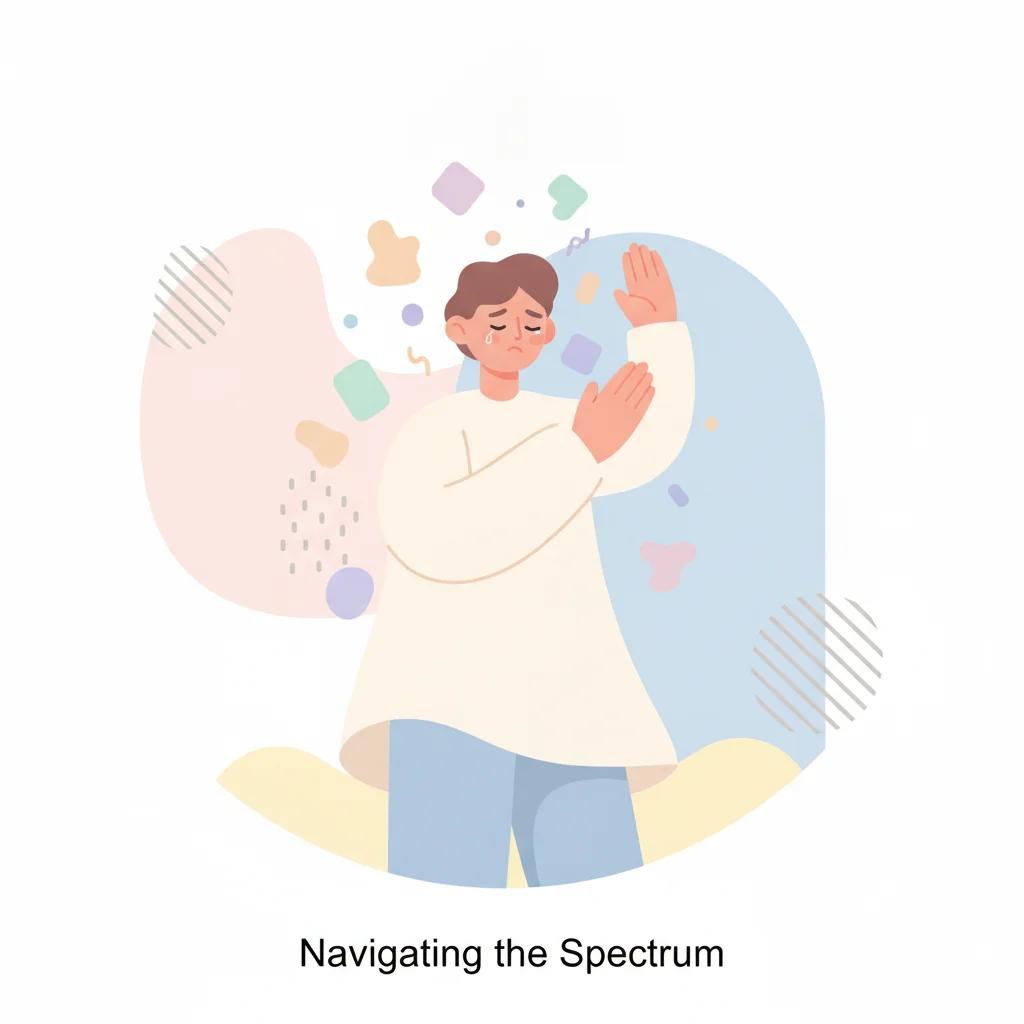
The connection between Autism and Complex PTSD is one of the most critical and silenced topics in the discourse on neurodiversity. For many autistic adults, living in a world not adapted to how their brains perceive and process information is a daily struggle. This is not about a single, isolated traumatic event, but rather repeated experiences of misunderstanding, rejection, Sensory Overload, and a constant demand to Mask who they truly are. These experiences, accumulating over years, often lead to Complex PTSD. Understanding this connection is a crucial first step towards self-acceptance, adapting one's living environment, and receiving accurate support that does not try to fix the person, but rather to contain their lived experience.
What is Complex PTSD in the Autistic Experience?
Complex PTSD develops as a result of prolonged, repeated exposure to threatening or harmful events, often in situations where the person feels unable to escape or defend themselves. Unlike classic trauma caused by a specific, defined event, the structure of Complex PTSD resembles drops of water eroding a stone over years.
For many autistic people, childhood and adulthood experiences are saturated with events where their feelings are invalidated. A society that demands a person behave in complete opposition to their neurological makeup inevitably creates continuous distress. This manifests in various ways that affect the nervous system and self-perception. Difficulty reading unwritten social codes, Hyper Sensitivity that goes unaddressed, or an environment that punishes natural Stimming behaviors, all take a heavy toll.
When an autistic brain repeatedly encounters experiences of criticism, ostracism, or attempts by the environment to "normalize" it, it learns to identify the world as an unsafe place. Researchers have found that the tendency of autistic brains towards Autistic Rumination, meaning circular and sometimes obsessive thinking about past events, makes them even more vulnerable to developing post-traumatic symptoms after negative experiences. The brain replays the event in an attempt to understand it, but in practice, it solidifies the stress response.
Masking as a Chronic Trauma Factor
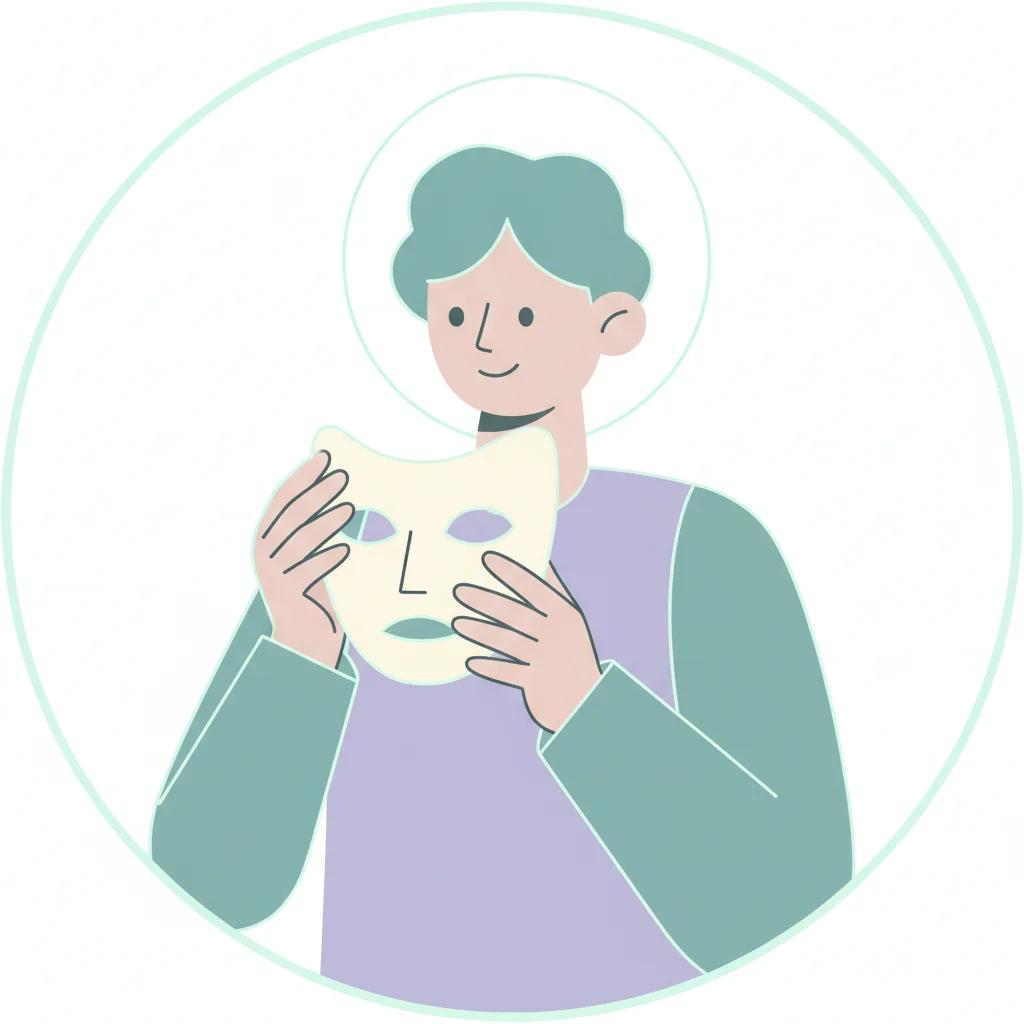
One of the main factors in the development of Complex PTSD among autistic people is Camouflaging or Masking. This is a survival strategy where the person suppresses their natural autistic traits and adopts behaviors accepted in general society, in an attempt to fit in and avoid rejection. This process requires constant self-monitoring of body language, eye contact, tone of voice, and word choice.
Erasing personal identity for social acceptance
Exhausting cognitive analysis of every interaction in real-time
Ignoring physical Stimming needs to avoid drawing attention
A feeling of detachment and emptiness resulting from the gap between the external and internal self
Years of Masking lead to Autistic Burnout. Unlike regular fatigue, this burnout is characterized by a loss of previously acquired skills, an extreme drop in energy, and an increase in the frequency of Meltdowns or Shutdowns. The effort to maintain a fabricated persona to the outside world is in itself a traumatic experience, as the internalized message is that the person in their natural form is not worthy of love or acceptance.
The Fawning Mechanism: Agreeing to Survive
Responses to trauma are divided into several known types, including fight, flight, or freeze. However, among autistic adults, we see widespread use of an additional response called Fawning. This response is designed to prevent conflicts or danger through immediate appeasement of the other party, cancellation of personal boundaries, and abandonment of authentic needs.
Many autistic people learn from a young age that if they just agree, smile, and do what is expected of them, they will avoid criticism or punishment. Fawning becomes second nature, to the point where the person may lose touch with their true desires. This mechanism is particularly dangerous because it leaves autistic people vulnerable to abusive relationships and exploitation, as their internal warning system is silenced in favor of maintaining external peace.
Lack of Understanding in the Medical and Diagnostic System
This phenomenon of Fawning and Camouflaging often leads to blindness in the therapeutic system. Autistic people may sit in front of professionals, smile, and communicate in a way that appears completely normal, while collapsing internally. Professionals who are not deeply familiar with the adult autistic experience may interpret the Fawning behavior as a sign of mental health, and completely miss the distress and Complex PTSD simmering beneath the surface.
Misdiagnosis: When Autism Falls Through the Cracks
The intersection of Autism and Complex PTSD often leads to severe diagnostic confusion. Autistic adults, usually with varying support needs that do not require close supervision, come to professionals due to life crises or functional collapse. In many cases, traditional psychiatry identifies the signs of trauma but misses the autistic foundation.
Studies show that autistic people dealing with Complex PTSD are often misdiagnosed with Borderline Personality Disorder. Both experiences may include difficulties with emotional regulation, a tendency towards intense relationships, and an unstable sense of identity. However, while for a person with Borderline Personality Disorder, instability often stems from abandonment anxiety, for the autistic person, identity loss stems from years of Masking, and regulation difficulties are often the result of pure Sensory Overload or social misunderstanding.
Missing the autistic diagnosis is critical. Treatment intended for personality disorders is not suitable for the autistic brain and sometimes causes further harm. For example, attempting to treat social avoidance as merely anxious behavior, without considering that avoidance is a necessary tool for protection against sensory overload, will push the person beyond their neurological capacity, deepening the trauma.
Sensory Trauma and a Hostile Environment
An integral part of the concept of trauma in the autistic context relates to Sensory Processing. For the autistic brain, stimuli that the environment perceives as neutral can be experienced as actual physical pain. Fluorescent lighting in an office, the noise of a cooling board, the touch of a clothing tag, or the smell of perfume, can activate the brain's alarm system as if it were a real threat to life.
Constant presence in a sensory-unadapted environment keeps the nervous system in perpetual vigilance. Imagine a situation where you are daily under attack that no one but you experiences or acknowledges. When the person reports distress and the environment dismisses it with claims of Hyper Sensitivity, another seed of self-distrust and disconnection from the body is sown. Sensory trauma is a layer that is very difficult to explain to people not on the spectrum, but it is a daily reality that erodes mental resilience and solidifies post-traumatic responses.
Paths to Healing and Creating a Safe Space
Coping with Complex PTSD in autistic adults requires a completely different therapeutic and systemic approach than that customary in the general population. The starting point must be that Autism itself is not the problem to be solved. The recognition that the nervous system operates differently is the basis for any healing process.
Validation of personal experience and understanding that difficulties are a result of an unadapted environment
Identification of Masking and Fawning mechanisms, and gradual learning to Unmask in safe spaces
Full legitimization of sensory regulation needs such as Stimming or the use of calming aids
Making therapeutic communication accessible to suit autistic thinking
Therapists and professionals must recognize the unique dynamics of the autistic brain and adapt treatment methods. Methods based solely on cognitive change may be useless and even debilitating, because distress often does not stem from thinking distortions, but from a real neurological response to the environment.
The autistic community is a powerful healing factor. Meeting other autistic adults who share similar experiences of neurodiversity, Masking, and trauma, allows for the creation of a true sense of belonging that is sometimes experienced for the first time in life. The knowledge that you are not flawed or to blame for your situation, but simply a person operating on a different operating system in a world not written for it, is in itself the beginning of an exit from the cycle of trauma and a return to a life of acceptance and self-respect.
Frequently Asked Questions
What is Complex PTSD in the context of Autism?
Complex PTSD develops as a result of prolonged, repeated exposure to threatening or harmful events, often in situations where the person feels unable to escape or defend themselves. For many autistic people, childhood and adulthood experiences are saturated with events of invalidation of their feelings, misunderstanding, rejection, Sensory Overload, and a constant demand to Mask who they truly are.
How does Masking (Camouflaging) affect autistic people and what are its consequences?
Masking is a survival strategy where the person suppresses their natural autistic traits and adopts behaviors accepted in general society. This process requires constant self-monitoring, erasure of personal identity, exhausting cognitive analysis of every interaction, and ignoring physical Stimming needs. Years of Masking lead to Autistic Burnout, characterized by loss of skills, extreme energy depletion, and an increase in the frequency of Meltdowns or Shutdowns, and is a traumatic experience in itself.
What is the Fawning mechanism and how does it affect autistic people?
The Fawning mechanism is a trauma response where the person immediately appeases the other party, cancels personal boundaries, and abandons authentic needs to prevent conflicts or danger. Many autistic people learn from a young age that if they agree, smile, and do what is expected of them, they will avoid criticism or punishment. Fawning becomes second nature, can lead to a loss of connection with true desires, and expose the person to abusive relationships and exploitation.
Why do medical and diagnostic systems sometimes struggle to diagnose Autism and Complex PTSD together?
The phenomenon of Fawning and Camouflaging often leads to blindness in the therapeutic system. Autistic people may appear "normal" externally, leading professionals who are not deeply familiar with the adult autistic experience to interpret the behavior as a sign of mental health and miss the distress and trauma simmering beneath the surface. Additionally, autistic people dealing with Complex PTSD are often misdiagnosed with Borderline Personality Disorder, due to similarities in some of the difficulties.