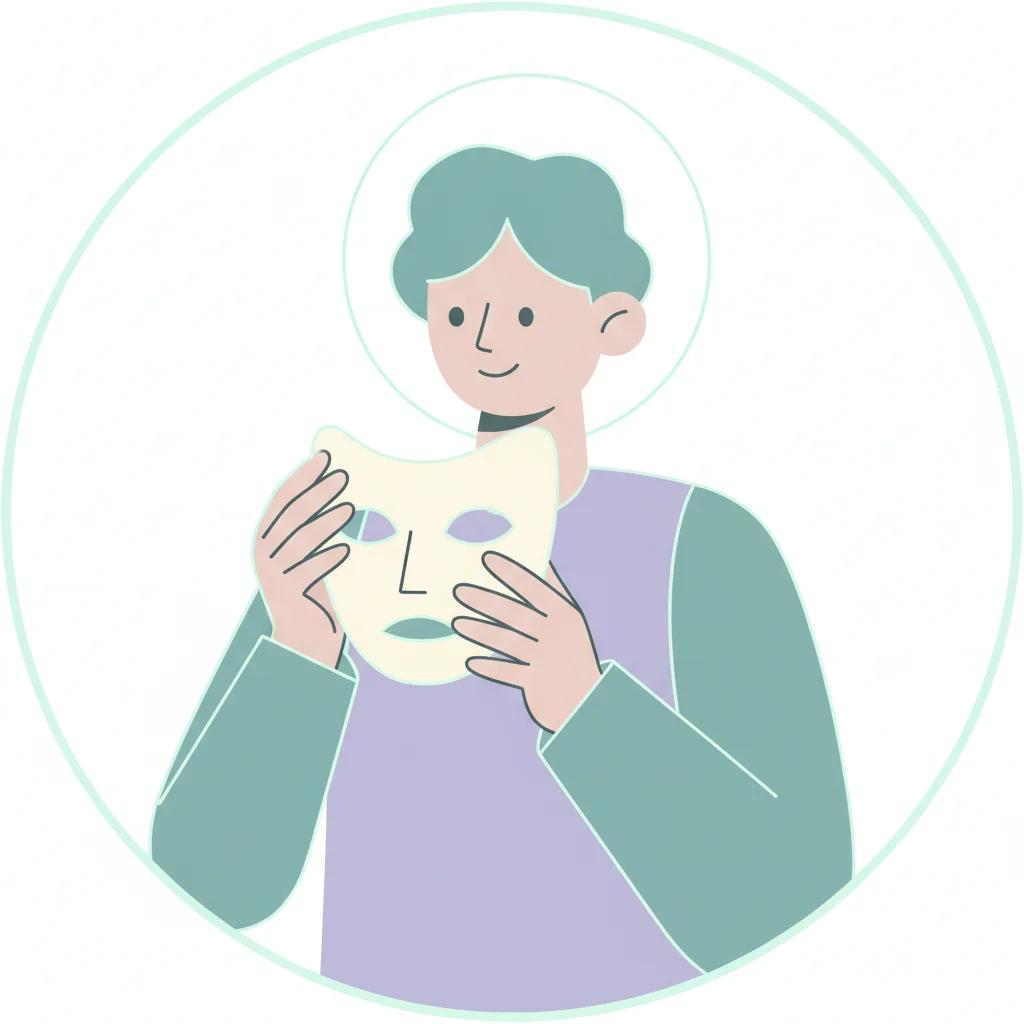
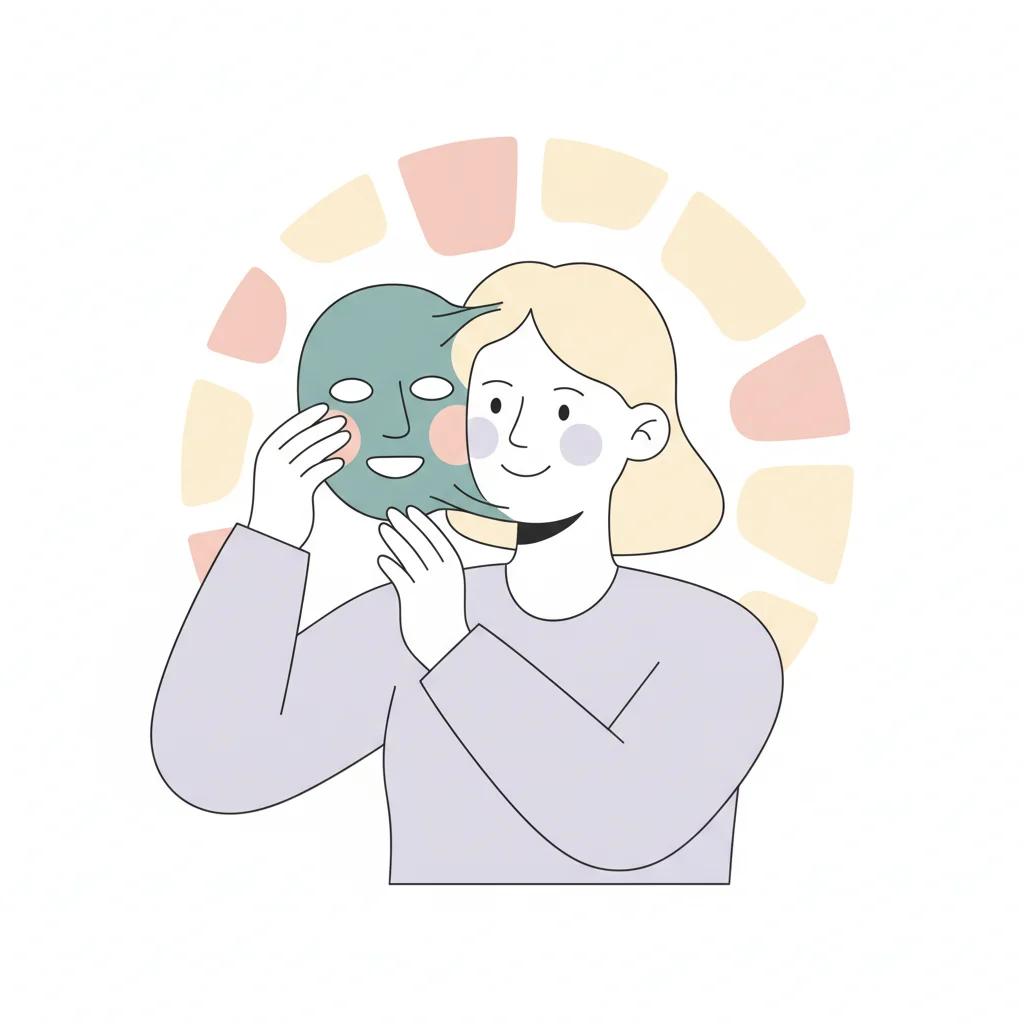
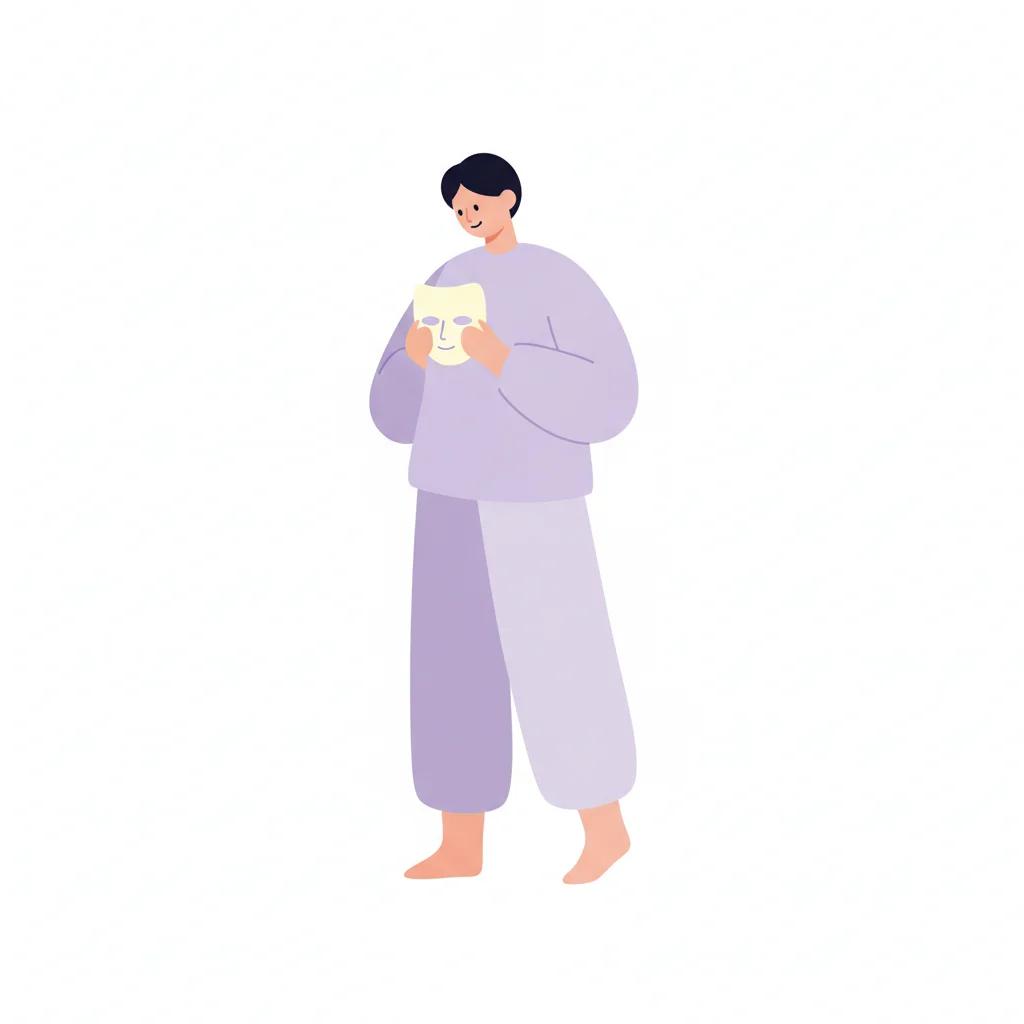
Masking / Camouflaging is a complex social and cognitive survival strategy in which a neurodivergent person (autistic, with ADHD, dyspraxia, etc.) consciously or unconsciously suppresses, conceals, or hides their natural characteristics and behaviors, and adopts neurotypical behaviors to "fit in" with the environment and avoid social sanctions.
In the modern discourse of the neurodiversity movement, the term Adaptive morphing is sometimes proposed as a more respectful and accurate alternative, emphasizing the active and adaptive nature of the phenomenon instead of presenting it as mere concealment.
How does Masking manifest in practice?
Masking requires constant self-monitoring and includes a wide range of tactics:
Conscious behavioral imitation: Self-feeding with pre-prepared conversation scripts for small talk, imitating body language, facial expressions, and speech tones of others, and forcing oneself to make eye contact (even if it is experienced as overwhelming or sensori-painful).
Suppression of natural regulation mechanisms: Hiding or suppressing self-regulating movements (Stimming), such as stopping hand flapping, rocking, or humming, and replacing them with tiny, invisible movements.
Hiding needs and challenges: Hiding difficulties in Executive Functioning, pretending to understand complex social codes (to bridge the Double Empathy Problem), and exercising willpower against severe Sensory Overload from lighting or noise.
Causes and reasons for Masking
Masking does not stem from a desire to deceive, but is activated as a survival defense mechanism against an inaccessible environment:
Protection from social sanctions: Preventing painful experiences of rejection, ridicule, ostracism, workplace discrimination, or exposure to Mate Crime.
Internalization of ableist norms: Continuous exposure to Ableism and a deficit-based approach (which promotes the Medical Model of the DSM-5), which teaches the person that their natural identity is "flawed" or "unacceptable."
Achieving functional goals: Passing job interviews, holding jobs, or surviving the education and academic system in the absence of Reasonable Accommodations.
The heavy price for mental and physical resilience
Although masking provides temporary external protection, the internal price it exacts is destructive and cumulative:
"Spoon" depletion and brain fog: Managing the mask requires concentrated physiological and cognitive attention every second. This effort rapidly depletes the person's "spoons" (according to Spoon Theory), impairs decision-making ability, and leads to Analysis Paralysis and chronic fatigue.
Coka Cola Bottle Effect and Sensory Hangover: The person holds out throughout the workday or studies, but as soon as they arrive home - their safe space - the neurological system collapses. This manifests as a Sensory Hangover, Meltdowns, or collapses into mutism and dissociation (Shutdown).
Autistic Burnout and loss of identity: In the long term, chronic masking reliably leads to Autistic Burnout - a severe loss of functioning that lasts months or years. In addition, the constant analysis of "what am I expected to be" fuels internalized ableism and Impostor Syndrome, and can cause the person to lose touch with their authentic desires and identity.
Delayed diagnosis (late diagnosis): Sophisticated masking (especially common in women) causes the person to be perceived externally as "High-Functioning Autism" due to the illusion of functioning, while the real needs derived from their Spiky Skills Profile remain invisible. Adult Autism Assessment often comes only after a severe collapse.
The path to healing: The Unmasking process
According to the Social Model of Disability, the target language is not to train the person to continue to camouflage, but to create conditions that will allow them to undergo a process of Unmasking:
Legitimizing self-regulation: Returning to free stimming, using sensory aids (headphones, sunglasses), and respecting rest times.
Making the environment accessible: Providing Reasonable Accommodations in studies and jobs (such as Supported Employment, written communication, or working from home) that eliminate the need to present a false functional impression.
Building a proud identity: Replacing shame and internalized ableism with self-compassion, recognizing unique strengths (such as Bottom-up thinking or Monotropism), and connecting with a community that accepts diversity as a natural part of human variation.